



Contents
The 70-20-10 model: what it is and why these particular numbers
The 70-20-10 model helps companies broaden the scope of employee learning and development. Its core principle is that people learn more from experience and interaction than from structured training.
The model describes how learning occurs naturally and suggests ways to accelerate and support this process:
- 70% — by completing real work tasks;
- 20% — through interaction with colleagues and experts;
- 10% — through professional literature, courses, and training.
According to the 70-20-10 model, most learning takes place not in training sessions, but directly in the workplace.
These numbers are merely a guideline. The actual ratio depends on the company’s culture, objectives, and capabilities. The key is to use the elements in combination: for example, training and mentoring are most effective when they support learning through work.
How the 70-20-10 model rethinks learning and integrates it into the workflow
By emphasizing learning through experience and interaction with others, the model provides a deeper understanding of what effective employee development means.
It shifts the focus from knowing “what” to understanding “how” — from sharing information to applying skills in practice.
Ultimately, the 70-20-10 model helps transform learning mindsets and practices, making them more adaptable and integrating them into employees’ actual work.
Learning and development professionals use the 70-20-10 model to refocus their work — from creating training activities to supporting and improving performance across the company.
The 70, 20, and 10 categories represent different ways of learning and developing high-performance habits:
- 70 — learning through experience, solving work-related tasks, and receiving support while working;
- 20 — learning through social interaction, communication with others, coaching, and mentoring;
- 10 — structured or formal learning.
Historically, learning and development teams were primarily responsible for tools in the “10” category — designing, implementing, and delivering formal learning activities. They sometimes also oversaw more structured elements of the “20” category, such as mentoring or coaching.
Well-organized formal learning in the “10” category can indeed improve performance. However, learning that occurs as close as possible to the time and place where it is applied is more likely to produce real change and better results.
Free guide
How to create effective development plans
Why the "70" and "20" categories matter more in the long term
The 70-20-10 model recommends starting with what is most likely to deliver fast, effective results and create the greatest value. These are solutions integrated into the workflow — the “70” and “20” components. Learning through experience and interaction has greater potential to change behavior, embed skills, and sustainably improve performance.
This recommendation is supported by The Secret Learning Life of UK Managers study. According to data from 500 manager interviews conducted by the research company ComRes, employees consider two main factors when choosing how to learn:
- accessibility — learning should be easy to apply and integrated into the work routine;
- speed of results — it is important to apply knowledge quickly and see its impact.
This applies to all formats, both online and offline.
The key to using 70-20-10 effectively is planning for 100. This means that any solution will most likely consist of the “70,” “20,” and “10” components.
It is important not to stop at “10” options at the outset. Instead, the solution should be designed with the end goal and all “100” components in mind. In other words, maintain a focus on the desired outcome while taking a comprehensive approach that includes the “70,” “20,” and “10” elements — in that order.
The phrase “start with 70 and plan for 100” is a useful guideline for creating effective learning solutions.
Read more about employee development in our article on how to create an IDP that works
How to enhance the 70-20-10 model
Performance support combined with digital technology is becoming the new standard and a key trend in learning. It is an alternative to full-scale training that saves time, reduces costs, and improves business outcomes.
Researcher Gloria Gery, one of the founders of the Performance Support concept, identified three levels of performance support:
- External — requires a person to step away from their work and consult a resource, such as a reference guide. This is the least effective format.
- Extrinsic — information is available within the system, but accessing it still requires the user to interrupt the task. For example, by opening a help window in the interface.
- Intrinsic — information and support are embedded directly into the work environment, require no context switching, and guide users as they complete tasks. This is the most effective and valuable level.
Employees typically learn before or after completing a task. However, when they need to apply what they have learned in practice, the course or training is often unavailable. At precisely this critical moment, performance support can deliver real value because it is available directly in the work environment and while the task is being performed.
This support serves as a flexible knowledge base where information is available 24/7 and can be easily scaled. It may take the form of instructions, reminders, prompts, or applications.
How it works: an example
The 70-20-10 model is ideal for creating an individual employee development plan. In Appraise, you can create an IDP in three minutes. The AI assistant generates goals and growth actions: 70% — practice, 20% — knowledge sharing and feedback, and 10% — theory. You can use ready-made materials or add your own.
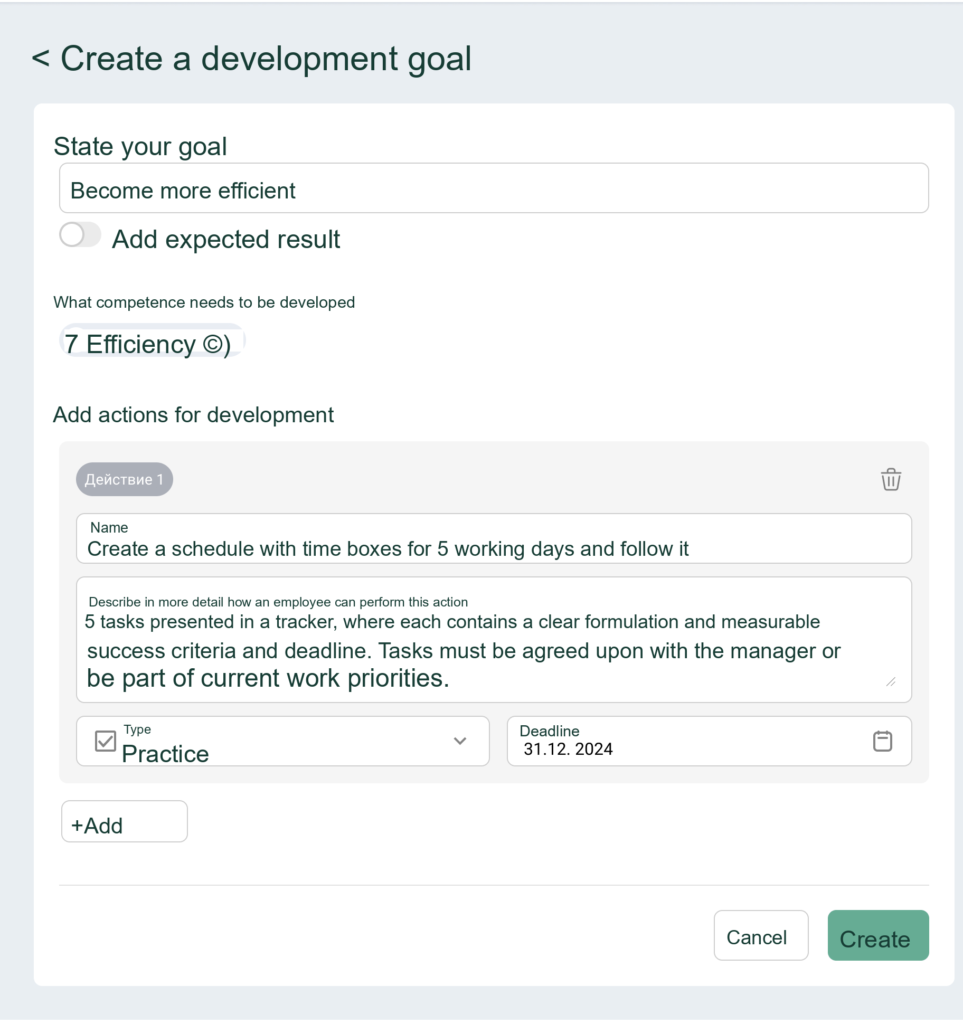
The AI assistant in Appraise creates an individual development plan based on the 70-20-10 methodology
If an employee forgets to complete actions in the plan, reminders can be sent.
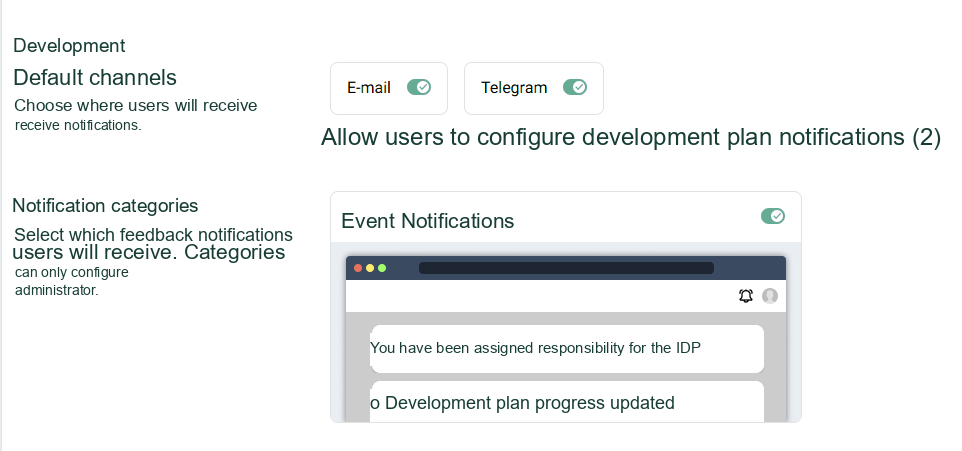
Appraise will send timely reminders about plan progress
This gives the employee a ready-to-use action plan for learning and development within the workflow. All the necessary information is available at any time and from any device. The manager can monitor progress against the plan and, when necessary, help with challenging tasks.
As a result, the employee works toward clear, achievable goals, strengthens their competencies and personal performance, and directly contributes to the company’s effectiveness and business results.
Automate employee development
Get plans with ready-made materials, track their completion, and assess employees’ professional growth in a single space