



The editorial team spoke with Sergey Andreev, founder of Appraise, about how Generation Z’s entry into the workplace affects HR processes, which Gen Z expectations companies most often overlook, and what truly helps build effective relationships with young teams.
Contents
- Are companies ready for Gen Z to enter the workforce?
- Who are Gen Z, and what do they need?
- The first step: effective onboarding
- Start onboarding before the first day of work
- The first day is about values
- Do not leave new employees without support
- Do not overlook Performance Reviews and assessments
- 1-on-1 meetings and feedback matter throughout the employee lifecycle
- Use gamification elements
- Focus on corporate culture
- Gen Z is a litmus test for your HR processes
Generation Z has been picked apart at every level, from television debates to conversations on neighborhood benches. People discuss their alleged unwillingness to work, extreme introversion, and unrealistic expectations of employers.
Generational theory is a useful supplementary tool, but it should never be the basis of communication. There is no need to approach Gen Z with preconceived notions or play short-form videos in meetings just to hold their attention.
This article examines practices and tools that are useful when working with every generation, but especially with Gen Z.
Are companies ready for Gen Z to enter the workforce?
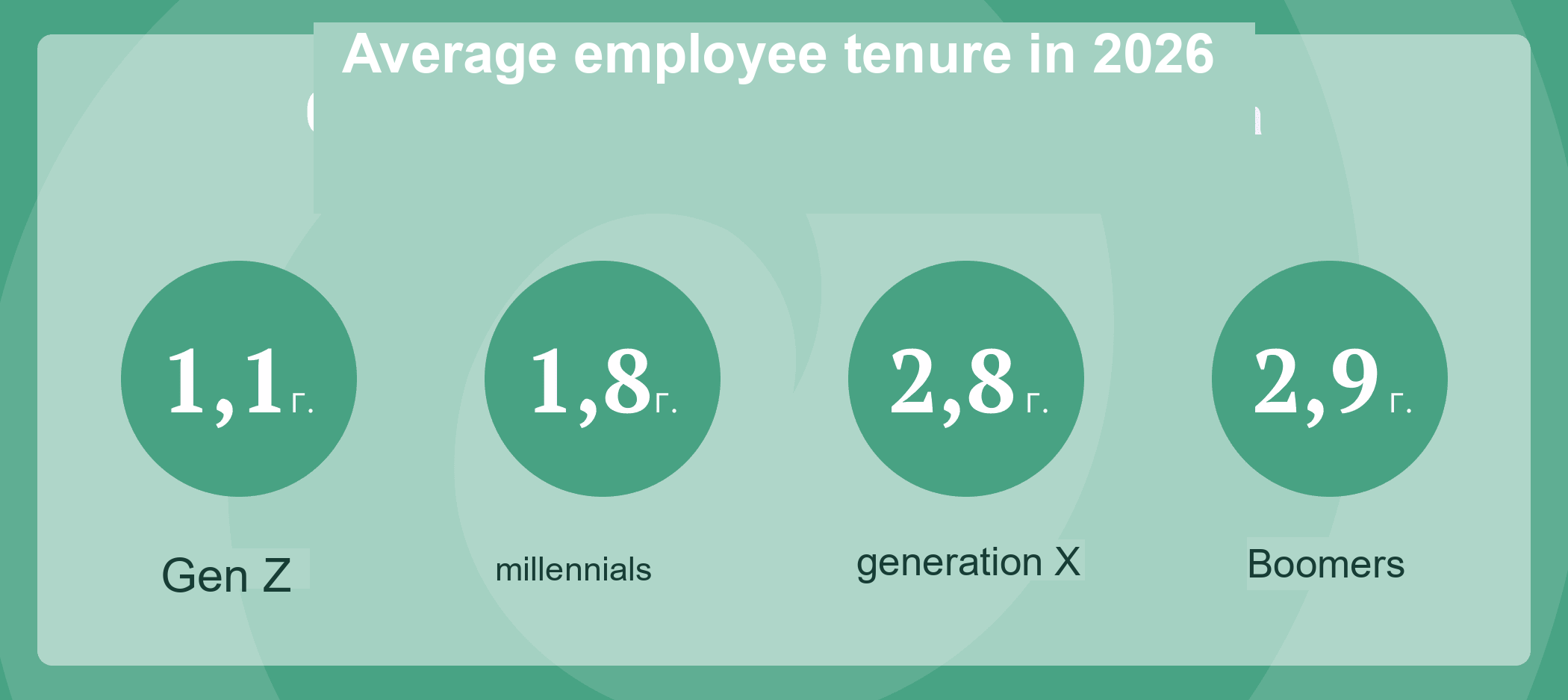
The statistics speak for themselves: the average tenure of a young Generation Z professional is approximately 1.1 years. By comparison:
- for millennials, the figure is 1.8 years;
- for Generation X, 2.8 years;
- for baby boomers, 2.9 years.
There are many reasons why professionals leave quickly, from outdated onboarding systems to bureaucracy that discourages young employees.
Companies therefore need to adapt their employees and processes to the new reality before moving into active recruitment. Otherwise, they may simply waste money: the average hiring cycle takes approximately 6 months and costs up to 200% of the employee’s annual salary — hiring has become extraordinarily expensive.
Who are Gen Z, and what do they need?
Gen Z is the first generation for whom online and offline environments are inseparably connected. The internet is a natural part of their lives, and the smartphone has become an indispensable tool. Generation Z employees prefer messaging to meetings, avoid lengthy calls, and are reluctant to support corporate values unless they find them meaningful.
Young professionals want to see the results of their work and receive regular feedback. McKinsey research shows that for 60% of Gen Z employees, the key driver of loyalty is alignment between the company’s values and their own beliefs.
Supporting professional growth and skill development is critical to retaining Generation Z talent. Mentoring and regular feedback are particularly important to Gen Z employees, helping them feel confident and see genuine prospects within the company. They need to know that the company is investing in their future and supporting their ambition to grow.
Top 4 initiatives for optimizing HR processes
- Regular 1-on-1 meetings and Performance Reviews
- Gamified feedback
- Setting goals in terms of their contribution to a shared purpose
- A transparent, automated feedback system
The first step: effective onboarding
Onboarding is the process of integrating a new employee into the team, their role, and the corporate environment. It is best to allocate at least five working days so that the employee can settle into the workflow, learn the processes, and work through their initial response to the new environment at a comfortable pace.
Deloitte research shows that Gen Z expects the same thing at work as in everyday life: a digital, flexible, and transparent environment for interaction. This is why their tolerance for outdated corporate practices is low.
One of the most common mistakes employers make is trying to fit young employees into existing processes without attempting to change or adapt anything.
The outcome is predictable. According to SoftwareFinder, 22% of Generation Z employees consider quitting within their first weeks at work, while 8% actually leave within the first three months.
To improve your onboarding process, consider the following recommendations:
Start onboarding before the first day of work
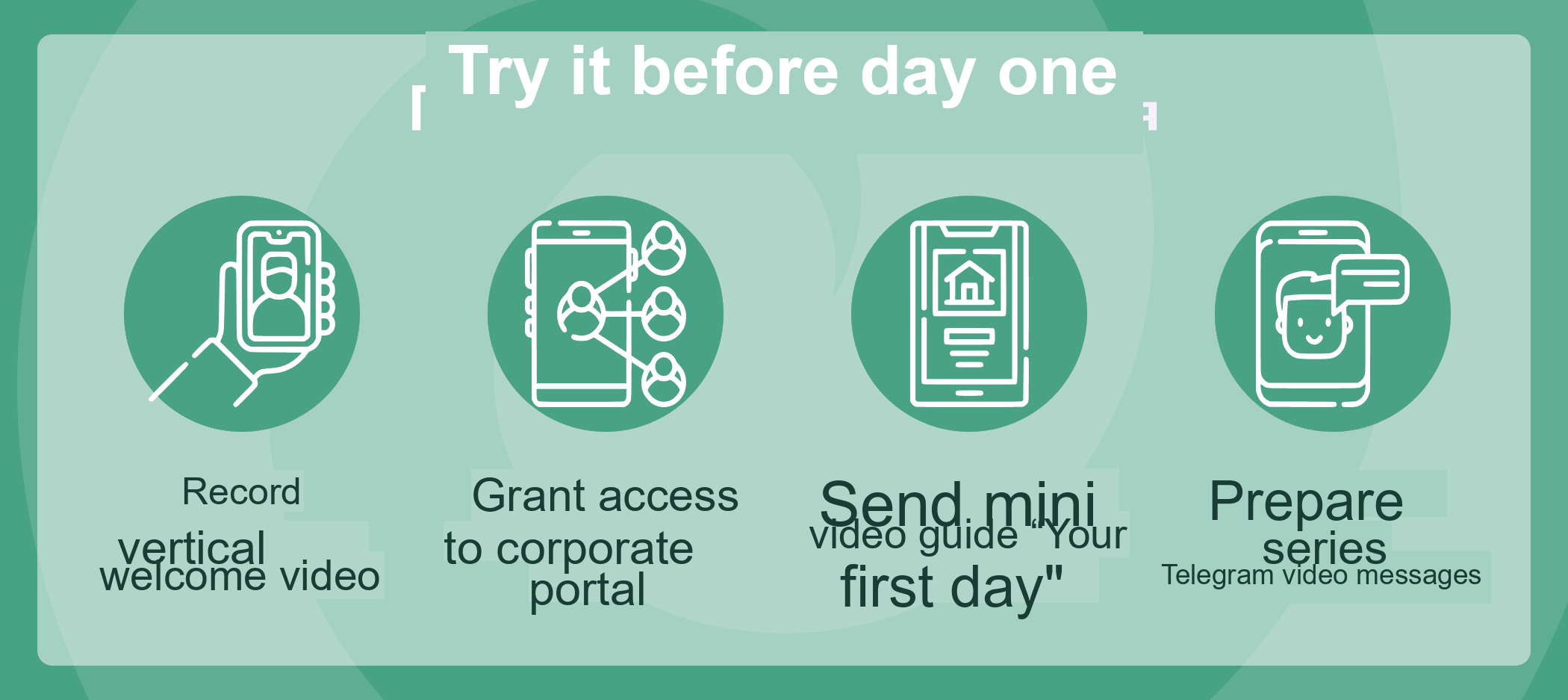
Avoid overwhelming new hires with long texts or extensive documents. A more effective format is a welcome video from the manager introducing the employee to the company, the office, the benefits, and what to expect on their first day. Ideally, these videos should be vertical, as Gen Z is accustomed to consuming content on mobile devices.
If producing a complete video is not feasible, short video messages or Telegram video notes will also work. The key is to create a sense of inclusion and set the right emotional tone. According to LinkedIn, companies that use preboarding programs retain new employees 20% more effectively.
Values, not bureaucracy
Legal formalities and document signing are unavoidable, but they should not be the sole focus of the first working day. Add engaging activities and light gamification. According to industry research, 89% of employees believe game mechanics make them more productive, while 83% report higher motivation than with traditional training formats.
For example, you could prepare an office map featuring a short quest and a hidden gift, or use interactive boards to introduce key processes, the product, and the company’s values. Details like these help ease tension more quickly and create a positive first impression.
Do not leave new employees without support
Schedule 1-on-1 meetings in advance and make it clear that you are always open to dialogue. New employees need to feel supported and comfortable asking questions. It is helpful to discuss probation-period goals immediately, but we recommend looking beyond the numbers alone.
Offer the new employee a small but meaningful project. Gen Z values opportunities to show initiative and creativity rather than simply carry out prescribed tasks. This approach helps them engage more quickly and appreciate the value of their role.
It will also give you a fuller picture of how the employee adapts, tackles unconventional challenges, and handles assignments without clearly defined stages or micromanagement.
Build a transparent development system
Gen Z does not respond well to uncertainty. It is therefore unsurprising that employees may ask about growth opportunities and the company’s development on their very first day. They want to understand in advance what their career path will look like and what determines it.
A transparent grading system and individual development plans (IDPs) are particularly valuable here. A well-designed IDP is not a formality, but a practical retention tool. It shows employees that the company cares about their growth and is prepared to invest in their development. According to Engagedly and AIHR, 94% of employees stay with a company longer when they see genuine opportunities for professional development.
How it works in practice
For the system to deliver meaningful results, it is important to:
- Digitize employee development paths. They should include not only vertical advancement but also lateral moves, such as expanding expertise, changing focus, or taking on new assignments.
- Define grade requirements. Specify the hard and soft skills required for each grade, along with the expected level of proficiency. This reduces subjectivity and clarifies expectations.
- Account for role-specific needs. A conventional grading system may not suit every position. In such cases, grades can be linked directly to performance. It is especially important, however, to define the assessment criteria clearly: what does it mean to “perform tasks well” or to be “ready to take on greater responsibility”?
Appraise lets you manage employee development in one place with flexible automation and an AI assistant.
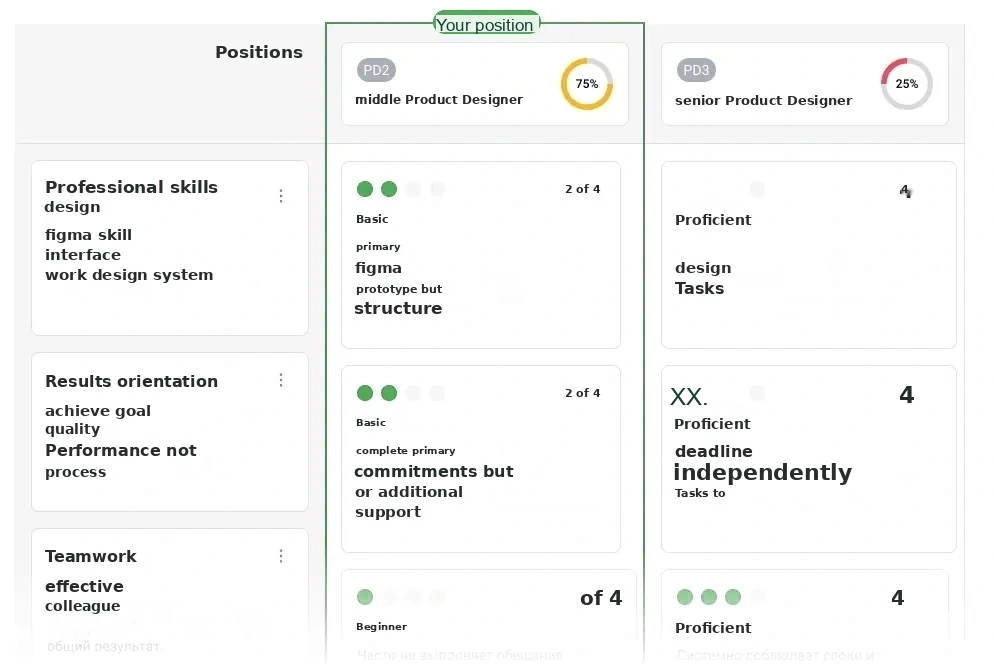
Example of career tracks on the Appraise platform
Do not overlook Performance Reviews and assessments
It is important to remember that employee assessments should not take place only once a year. With this approach, feedback often arrives too late, data quickly becomes outdated, and employees may burn out in the meantime. Regular, short assessment and progress-review cycles are far more effective.
Appraise supports every type of assessment, including onboarding assessments, 360-degree assessments, Performance Reviews, and feedback requests.
1-on-1 meetings and feedback matter throughout the employee lifecycle
Another effective practice is to offer open slots, allowing any employee to schedule a 1-on-1 meeting, request feedback from a manager or colleague, and discuss their development without needing a formal reason.
Gen Z places great value on purposeful action and wants to work for companies where their views are genuinely considered and their contributions are recognized. They need to see not only tasks, but also purpose, values, and an organization’s willingness to engage in open dialogue. This kind of environment provides the foundation for long-term engagement and trust.
Use gamification elements
Game elements such as points, badges, leaderboards, and mini-challenges are effective for more than just young employees. Research confirms that gamification increases interest, supports the development of new skills, and improves performance.
Gamification helps to:
- Encourage participation in surveys and assessments: employees earn points for completing questionnaires, while you gain more data for decision-making.
- Build a lasting feedback habit: ease of use, a positive tone, and immediate responses turn the system from an obligation into part of the daily workflow.
- Develop a culture of appreciation: recognition and public acknowledgment make every person’s contribution visible and valued.
Article: How to boost employee engagement with virtual currency and a corporate store
For example, Concentra Health Service employees earned points for participating in assessments and internal surveys and for using HR tools. Engagement increased by 19% in six months, and even employees who usually ignored HR initiatives began participating.
Appraise already has everything you need to make employees enjoy completing surveys and giving feedback: corporate currency, a gift store, and an action-based rewards system.
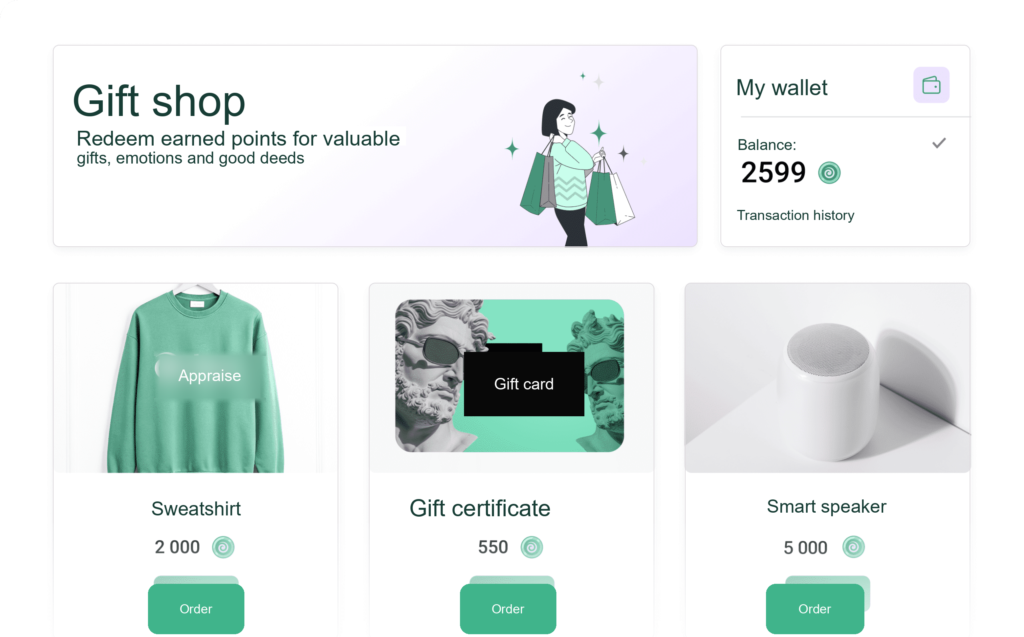
Example of a gift store on the Appraise platform
Focus on corporate culture
For Generation Z, corporate culture is no longer a formality: it becomes the experience of belonging to a dependable team where they can contribute to something meaningful rather than simply perform their duties. McKinsey research confirms that alignment of values is one of the main drivers of Gen Z loyalty and engagement.
Generation Z seeks to preserve individuality in the professional environment. These employees are highly attuned to the team atmosphere and quickly recognize insincerity: at the first sign of a gap between words and actions, they are prepared to leave.
Their ideal work environment is built on a balance of:
- freedom without chaos;
- flexibility without abandoning rules;
- trust without permissiveness.
For Gen Z, a positive corporate culture means:
- clear boundaries without excessive pressure;
- a focus on results rather than time spent in the office;
- the ability to discuss difficulties openly and ask for help without fear of judgment;
- a sense of belonging to a vibrant, close-knit community.
Generation Z no longer sees hybrid work as a privilege; it has become a basic expectation. According to Talent LMS, 81% of this generation identifies it as one of the key criteria when choosing an employer.
Gen Z also actively seeks self-expression and readily shares workplace experiences on social media and personal blogs. This gives companies a unique opportunity to gain brand ambassadors, provided that employers do not restrict their authenticity or require them to gloss over problems.
Gen Z is a litmus test for your HR processes
Before Generation Z entered the workforce, many managers did not realize how fundamentally different approaches to organizing processes could be. The defining feature of this generation is that when leaders are willing to listen and consider their ideas, Gen Z employees can substantially enrich the professional environment. Their contributions range from interpreting current trends to introducing fundamentally new approaches to traditional HR processes.
Generation Z has become an indicator of the maturity of companies’ HR processes and corporate cultures.
Boost engagement with intuitive gamification tools
With a convenient feedback system, automated assessment workflows, and an employee IDP management system.