



High-quality onboarding is no longer just a nice bonus for a company; it is essential. An employee’s engagement and long-term effectiveness depend on their first introduction to the company’s processes, team, and values. Let us explore how to run onboarding so that it supports business goals.
What you will learn
What effective onboarding is
Onboarding introduces a new employee to their responsibilities, team, corporate culture, and company values.
The first days in a new job are always stressful. This is when employees form an impression of the company that will affect their motivation, engagement, and productivity.
Some companies underestimate the importance of onboarding new employees and limit it to a standard workplace introduction and brief instructions. In practice, onboarding is more than a formal introduction to the job.
Effective onboarding should make new employees feel comfortable, provide complete information about the company and their responsibilities, and prepare them to engage with work processes. Onboarding may last from a few days to several weeks, but its goal remains the same: to ensure a smooth transition, strong employee engagement, and retention from the very beginning.
Onboarding and employee adaptation: what is the difference
Onboarding is a series of steps designed to integrate new employees into the company. Essentially, it is a checklist of actions a new employee should complete within a set period: review documentation, learn about the corporate culture, attend initial meetings, review the work plan, and so on.
Adaptation is a longer process intended to help an employee become a full member of the team and perform their responsibilities effectively. It can last from several months to a year and may include training, feedback, and ongoing motivation.
Onboarding can be described as an essential first stage of effective employee adaptation.
6 key onboarding mistakes, or what prevents a smooth start
Even a well-designed onboarding program can be ineffective if mistakes are made. Here are the most common ones.
1. No clear program
Without a plan, an employee may feel lost. Uncertainty about the first steps creates stress and reduces motivation.
2. Insufficient attention from the manager
If the manager is not involved in onboarding, the employee may feel unnecessary. Active management involvement shows that the new hire is genuinely valued by the company.
3. Too much information
Overloading a new employee with documents, instructions, and tasks in the first few days can be intimidating and highly stressful. The introduction to processes should be structured and gradual.
4. Ignoring feedback
If no one asks a new employee how their introduction to the company is going, they may feel that their opinion does not matter. Feedback helps identify and resolve potential issues and makes employee adaptation faster and easier.
5. Lack of personalization
A standardized approach to onboarding may save an HR professional time, but ultimately makes the process ineffective. Differences in a new employee’s experience, skills, and working style must be considered. Otherwise, they may feel undervalued and lose motivation.
6. Insufficient team interaction
If a new employee has no opportunity to properly meet their colleagues, this slows adaptation and makes it harder to build productive working relationships.
Checklist
How to organize high-quality onboarding
Rules for successfully onboarding new employees
Onboarding does more than integrate employees into a team; it can become a powerful tool for attracting and retaining talent. Proven techniques can help. Here is what works in practice.
Create a clear onboarding plan and structure
A well-designed program with a schedule of activities, training sessions, and meetings helps employees understand what is expected of them at each stage.
Assign a mentor
An experienced colleague or mentor provides invaluable support during the first few days, when everything is unfamiliar. A mentor can answer questions, share experience, and help a new employee settle into the workplace more quickly.
Introduce the corporate culture
A new employee should be introduced to the company’s distinctive features and shown how it operates. Presentations, introductory materials, and discussions provide context and help the newcomer feel part of the team.
Tailor training to the employee's needs
Training sessions, simulations, video lessons, and gamification can make learning materials more varied, engaging, and memorable.
Collect and provide feedback regularly
Open communication with a manager or HR manager helps identify difficulties promptly and support the employee.
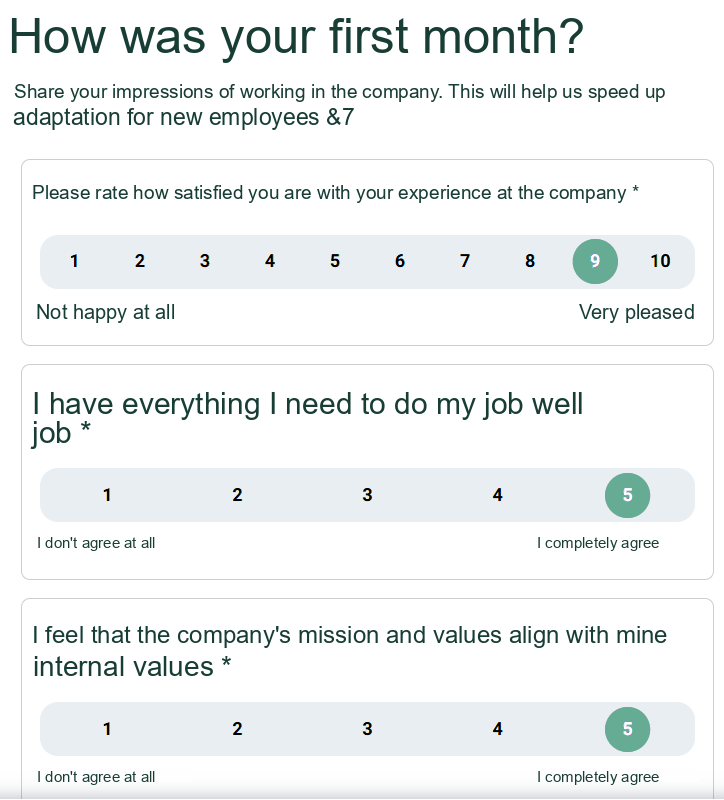
Example feedback survey
Focus on the employee's social integration into the company
Shared lunches, informal meetings, and events with colleagues are excellent ways to integrate a newcomer into the team. They also create and reinforce a sense of belonging to both the team and the company as a whole.
Increase the workload gradually
It is important not to overload employees with tasks in their first few days. Gradually increasing responsibility allows them to adjust to the new role and build confidence.
Automate the process
Modern HR tools and platforms simplify onboarding. For example, surveys can be launched from ready-made templates in just a few clicks, while employee progress can be tracked.
Read about onboarding remote teams in this article.
What helps deliver onboarding and assess its success
The simplest way to understand whether an employee onboarding program is working and how it can be improved is to hold interim meetings with an HR professional. However, this approach is inconvenient for recording the employee’s answers, results, and requests.
Regular surveys during and after onboarding are an excellent addition. They collect all feedback in one place and signal to new employees that the company values their opinions and cares about how they feel.
Appraise helps you create and launch these surveys quickly. inn. The platform offers ready-made templates that can easily be adapted for any research, including new employee onboarding.
A survey takes only a few minutes to launch, and analytics are compiled automatically, giving HR professionals convenient reports and key insights for improving employee adaptation. This not only saves time, but also personalizes onboarding and makes it more effective.
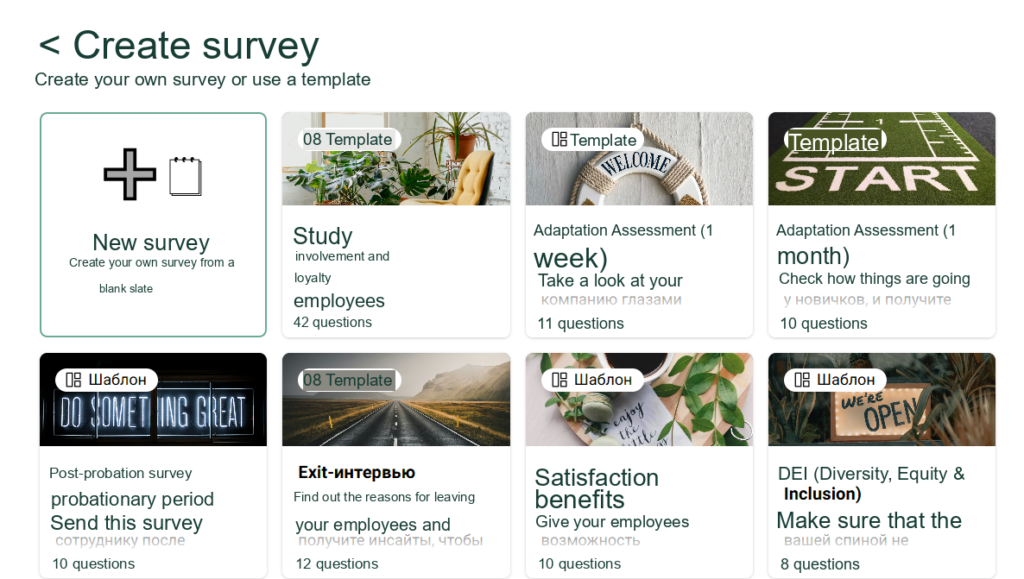
Surveys in Appraise: choose a template or create your own
Automate onboarding at your company
Simplify feedback collection and surveys with Appraise