



Employee engagement is a pressing challenge for businesses. Employees who are dissatisfied with their company are more likely to leave and tend to be less productive. Last year, the average employee engagement index in Russia was 69%, down 1 percentage point from the previous year. Gallup’s report reveals an even more troubling trend: in 2024, global employee engagement fell to 21%, its lowest level since the start of the pandemic. One way to improve this metric, show employees that they are valued, and recognize their contribution to the company is to use gamification mechanics. Let’s explore how this works.
What is gamification?
Gamification is the use of game techniques in non-game contexts, such as learning, exercise, work, and everyday life. In HR management, it includes motivational and educational programs, stronger workplace relationships, participation in activities, and improved KPIs. Gamification is useful for onboarding, building corporate culture, and developing the employer brand.
The goal of gamification is to engage people in an activity and encourage them to achieve results.
Why gamification matters in HR
Bunchball launched the first gamification platform designed to improve interactions between people in companies, complete with points and rankings, in 2007. Today, gamification helps:
1. Increase motivation
Game mechanics such as points, badges, levels, and leaderboards turn routine work into a challenge. Employees can see their progress and achievements even in everyday tasks.
2. Build a transparent recognition system
When everyone can see what points or internal currency are awarded for and how they are earned, recognition becomes more visible than praise given in private.
3. Foster a culture of collaboration.
A rewards system can be based not only on individual results but also on team achievements. This encourages employees to support one another rather than compete.
4. Develop skills and learn.
Gamified training and quests encourage employees to acquire new knowledge in an accessible format and reduce resistance to learning.
5. Retain talent and reduce turnover.
A game-based environment strengthens employees’ emotional connection to the company: they feel engaged and recognized. This is especially important for Gen Z employees.
In the short term, gamification boosts employee interest and activity through novelty and excitement. In the long term, when the mechanics are properly aligned with real goals and development, engagement in the work process increases. People are not simply playing: they understand that their efforts translate into recognition and tangible benefits.
The key to effective gamification is balance: rewards should reinforce the meaning of work, not replace it.
When to introduce gamification
- A decline in eNPS: internal surveys show that employees are becoming less loyal and engaged.
- Employees complete their tasks but show little initiative and do not participate in training or internal activities.
- A difficult onboarding process: new hires struggle with a lengthy transition into their roles.
- Training becomes a formality: employees check a box and promptly forget about it.
- A need to develop knowledge sharing, mentoring, and cross-functional connections between teams and departments.
- High turnover.
Game mechanics can spark interest through visible progress and turn obligations into an engaging competition, including a competition with oneself. Employees strive to achieve their goals better and faster and become more involved in the process. Their achievements also become visible and recognized, providing powerful motivation to develop within a company that offers such opportunities.
Different gamification tools suit different businesses: virtual rewards, points, rankings, competitions, and challenges. Let’s take a closer look at two versatile tools for boosting engagement: virtual currency and a rewards store.
Virtual currency
Virtual currency is usually awarded for completing tasks, successfully delivering projects, participating in events, or completing training. Crucially, employees’ contributions to the company are recorded and rewarded in the same units for everyone: points, coins, or credits. This reduces subjectivity because everyone understands what the currency is awarded for and how much they can earn.
Virtual currency can bring together a range of activities: onboarding, training, mentoring, survey participation, and team challenges. As a result, employees see a direct link: activity → reward.
Another excellent use of virtual currency is to say “thank you” to colleagues, for example, for helping with a task or collaborating on a project. This encourages people to go beyond their responsibilities and fosters a culture of feedback.
5 useful rules for introducing virtual currency
- Clearly explain what points are awarded for and how many. For example: participating in training, 10; mentoring, 50; successfully completing a project, 200.
- Eliminate subjectivity. Award points according to clear criteria, not on a whim.
- Set award limits. For example, one employee may give another no more than 200 points per month.
- Prevent employees from gaming the system by rewarding each other. Otherwise, the core principle behind virtual currency, objectivity, is undermined.
- Position rewards correctly. Virtual currency is a symbol of recognition, not a “second salary.”
Once the selection criteria have been defined, the next step is to determine who fully meets them and choose the best candidates. Various methods can help, such as 360-degree assessment. It considers the employee’s self-assessment as well as feedback from their manager, team, and direct reports.
Free guide
Company store
A company rewards store combines gamification, rewards, and recognition. Employees choose how they want to be recognized and what valuable reward they would like for their efforts: merchandise, a gift card, training, or a donation to a charity.
This approach to recognition increases satisfaction with rewards, encourages engagement, and helps employees feel part of the team. It is also motivating: more achievements mean more rewards.
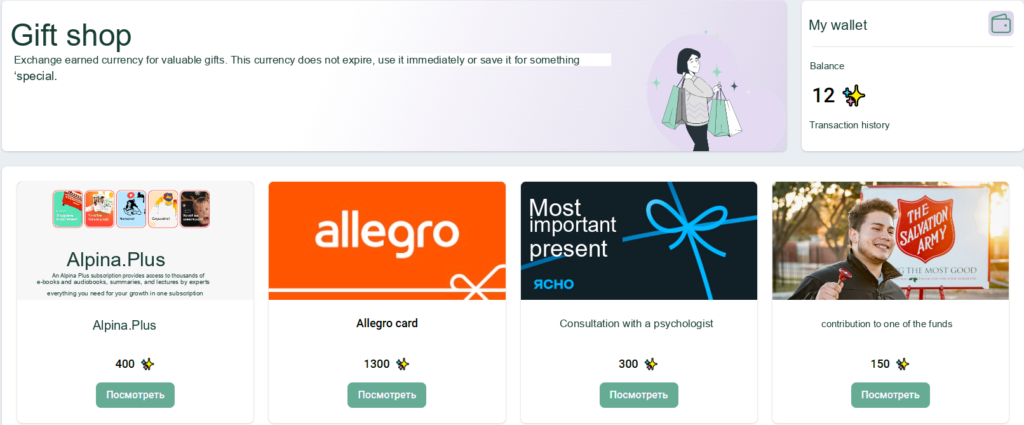
Example of a rewards store in Appraise
What to consider when creating a company store
Let’s examine the process step by step, from planning to implementation.
Calculate the budget
- Determine the total gamification budget.
- Calculate the amount per employee.
- Divide the budget into monthly or quarterly periods.
Use our calculator to help set your budget.
Develop the rules
For workplace participation to be voluntary, employees must agree to take part. To do so, they need to understand the rules, and the game must be fair. Gamification works when every participant clearly understands how to join, which actions earn rewards, and how those actions are recorded.
It is important to maintain motivational balance. For example, if a reward is too easy to earn, its value decreases. If tasks of varying difficulty earn the same rewards, the system may feel unfair.
Plan the product range
An employee store should offer a diverse range of products that employees genuinely want.
The selection can include:
- merchandise: mugs, T-shirts, and tote bags;
- certificates, subscriptions, and gift cards;
- gym memberships, foreign-language lessons, or an online course;
- physical and mental well-being services, such as massages or sessions with a psychologist.
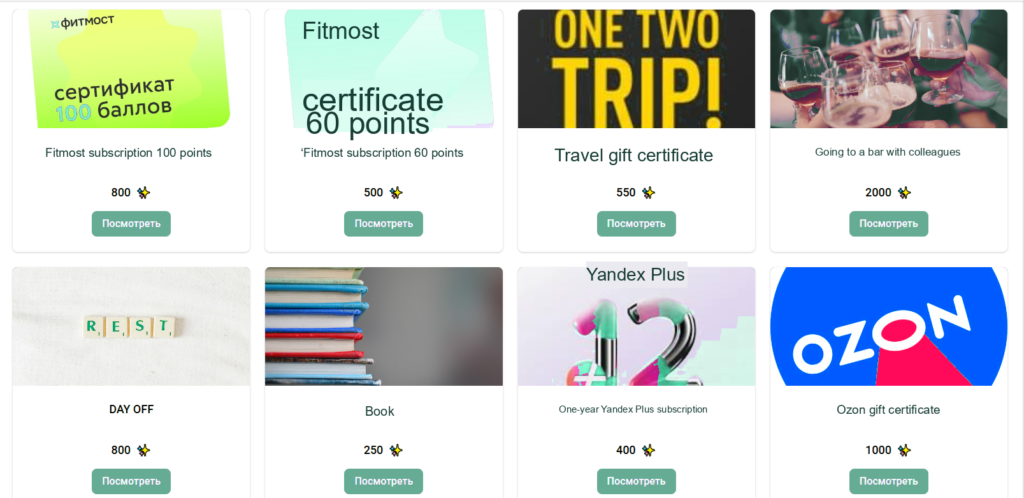
The store offers both tangible and intangible rewards, such as a day off
If one of the goals is to strengthen corporate culture, you can offer rewards that support the company’s values, such as leadership books, conference attendance, branded accessories, and volunteering days.
Do not overlook intangible rewards: an extra day off, access to exclusive events, or the option to work from home.
Choose a platform
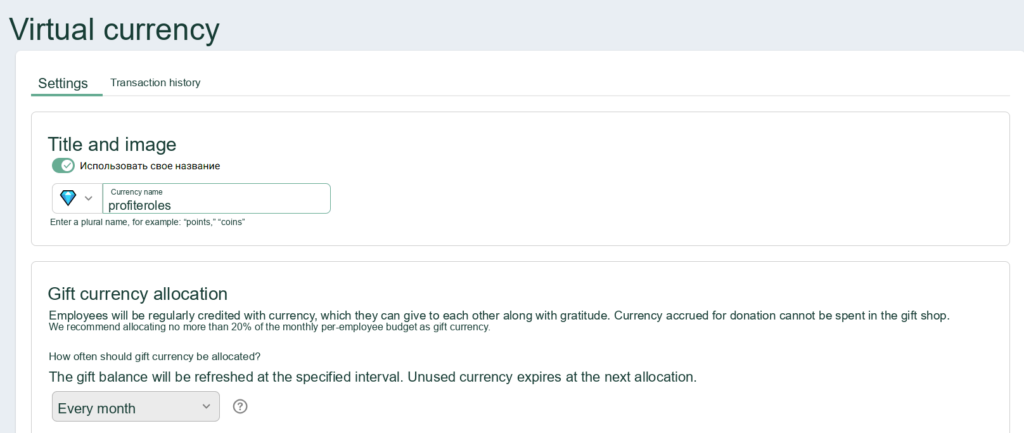
Creating a virtual currency in Appraise
Choose the actions that earn it.
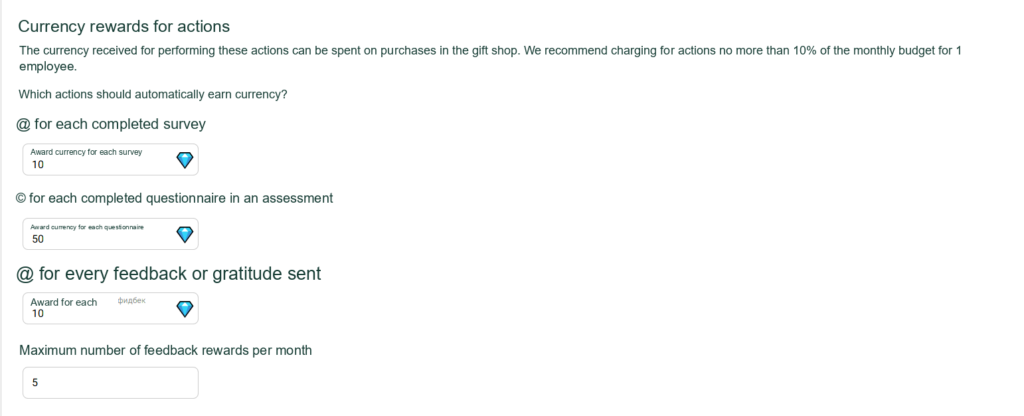
Choosing actions that earn currency in Appraise
Set the conditions for employees to give currency to one another.
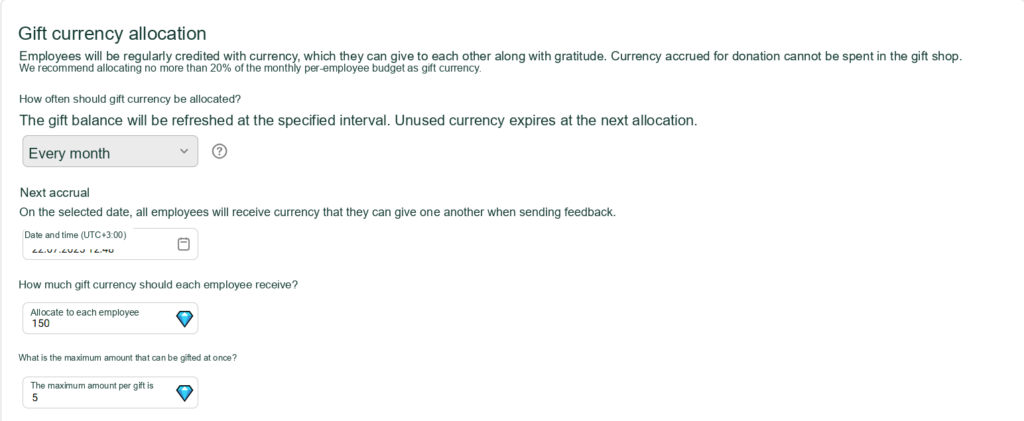
Choosing the conditions for employees to give virtual currency to one another in Appraise
Launch the store and add a product in just a few clicks.
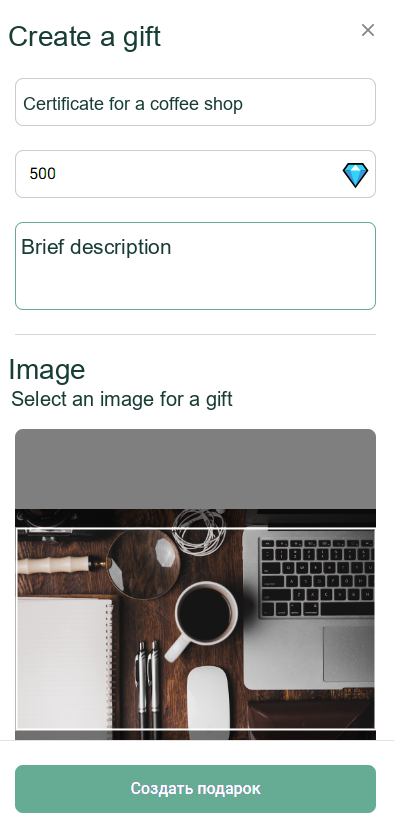
Adding a reward to the store in Appraise
Then ask employees whether they find the store easy to use.
Test the solution with a small group
Testing with several teams will help identify issues and refine the currency award rules or store selection.
Train employees
To encourage employees to actively use gamification, it is important to explain the details: what earns currency, how to spend it in the store, and how to place an order.
Collect feedback
Ideally, employees should be able to share their opinions and suggest ideas regularly, while the company acts on their feedback and improves the store accordingly.
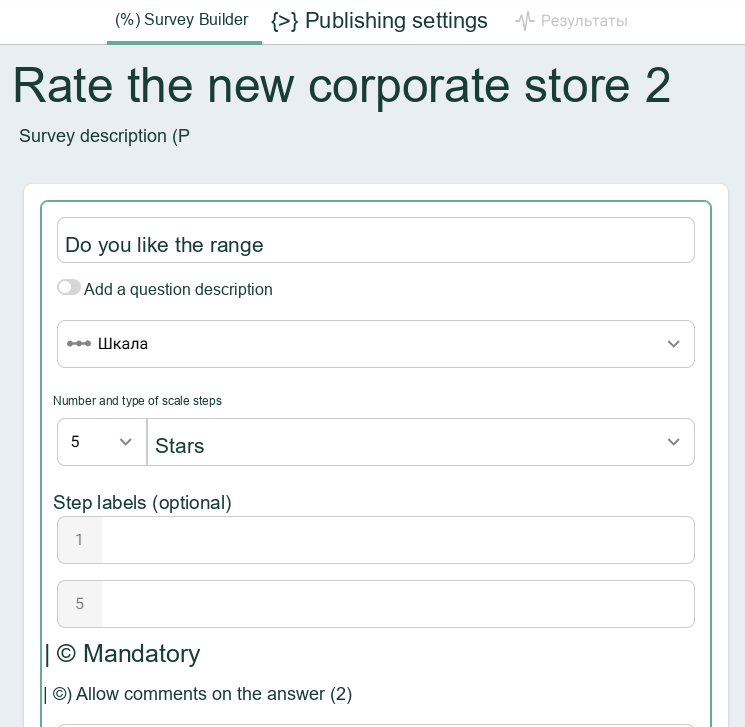
Survey in Appraise
Common company store mistakes
Here are several mistakes you may encounter when running an employee rewards store.
❌ A limited, unchanging selection
If the selection is not updated, employees quickly lose interest in the store. If there are too few items, or only mugs in different colors, the store feels like a box-ticking exercise.
❌ A merchandise showcase, not a store
For example, a company may add corporate gifts to the store without connecting rewards to real HR processes such as recognition and motivation. As a result, employees do not understand what they earn points for or why they should participate at all.
❌ Not integrated into the company culture
The rewards do not reflect the company’s values or identity. Employees feel no connection to the company, and the game loses its purpose.
❌ An unbalanced economy
If currency is too easy to earn, rewards lose their value. If an employee earns the same amount for a major contribution as for a simple action, the system is more likely to be demotivating.
❌ No intangible rewards
Training, a day off, or participation in an interesting project are often more appealing to employees than physical items or gift certificates.
❌ Poor UX
If the store is hard to find and employees cannot tell how much currency they have or how to place an order, very few people will use it.
❌ A poorly planned delivery process
If receiving a reward is difficult and time-consuming, employees are unlikely to do it again. A negative experience can undermine both the idea of gamification and employees’ attitude toward the company as a whole.
Key takeaways
 What is gamification in HR?
Gamification is the use of game mechanics in non-game contexts. In HR, gamification is a tool that:
- increases motivation;
- strengthens corporate culture;
- increases engagement;
- helps retain employees.
However, it works only when game elements are integrated into real HR processes: onboarding, training, career development, employee communication, and the rewards system.
Which gamification mechanics are used in HR?
They can be individual mechanics such as points, badges, and internal currency for purchases in the company store, or team mechanics such as challenges, leaderboards, tournaments, and rewards for shared results.
What is virtual currency?
It is an internal “company currency” such as points, tokens, or coins, awarded for completing tasks and projects, finishing training, or helping colleagues. Employees can exchange it for rewards in the company store.
What is a company rewards store?
It is a company store where employees spend their accumulated points on rewards such as merchandise, gift certificates, training, days off, or intangible benefits.
What should you consider when creating a company store for employees?
- Budget. Calculate it carefully for each employee and period (month/quarter).
- Rules. They should be clear to every employee and fair: completing a major project and a basic task should not earn the same amount.
- Selection. Keep it diverse by including both tangible and intangible rewards, and update it regularly.
- Intuitive interface. The store should be easy to find, and employees should be able to see how many points they have and how to place an order.
- Automation. Launch the store in just a few clicks, for example, in Appraise. All that remains is to name the currency, set the award period, and add products.
Learn more about how Appraise helps motivate valuable employees