



One key metric can reveal more about a company’s health than dozens of reports. The engagement index shows whether there are problems with turnover, sales target achievement, or market resilience. Let us explore how to launch an engagement and loyalty survey quickly, gather analytics, and use the results to plan company improvements.
Contents
Why companies should measure employee engagement
Engaged employees make 41% fewer mistakes, consider leaving half as often, and adapt to change more easily. Engaged teams also generate more profit for the company.
A survey helps identify problems and immediately begin developing solutions.

Free guide
Top factors for measuring engagement
Launching a survey requires a well-designed questionnaire. It is equally important to collect all relevant information and avoid overwhelming employees with questions. Here are the factors to consider when creating a questionnaire.
1. Meaningful work
Employees are more willing to engage in their work when they see its value. This is especially relevant for Gen Z employees; we explained how to engage with them in this article.
Sample survey questions:
- My work is valuable and meaningful.
- I understand how my work contributes to the company’s success
2. Understanding goals
When employees understand the goals they are working toward, their productivity increases by 25%. Conversely, when employees do not fully understand what is expected of them, they may begin to feel that they are performing poorly and are not valued.
Sample survey questions:
- I understand what results are expected of me at work.
- I understand the criteria used to evaluate my work.
3. Autonomy
When employees have a degree of autonomy, they understand that their manager trusts them, sees them as professionals, and can rely on them.
Sample survey questions:
- I can choose the methods and tools I use to complete my tasks
- I can propose and implement new ideas and approaches in my work.
4. Recognition of achievements
When employees are praised, they experience greater well-being. Recognition may come from management or from colleagues who also notice a person’s contributions.
Sample survey question:
The people I work with notice and appreciate my achievements and efforts.
5. Feedback
If a company lacks a feedback culture, employees may not understand why the survey is being conducted or what is expected of them. It is important to set the right tone from the start.
Surveys are not dossiers on individual employees or instruments of punishment. Your goal is to study the team climate and understand how comfortable employees feel within the company.
Sample survey question:
I regularly receive feedback on my work, including what I am doing well and where I need to improve.
6. Development
Development is important to everyone because it affects their sense of value within the company. We only live once, and few people want to work for a company that offers no career growth.
If you cannot offer vertical growth right now, encourage lateral development. Employees should have opportunities to work with adjacent departments, move beyond their usual responsibilities, and broaden their interests. This can ultimately lead to a promotion and may even help them discover a more rewarding field. The company, meanwhile, gains a more experienced and engaged employee.
Sample survey questions:
- At work, I have opportunities to develop existing skills and learn new ones.
- The company provides employees with the resources they need for learning and development.
- My manager discusses my professional development with me.
- I have opportunities to expand my responsibilities and increase my income within the company.
7. Relationship with the manager
Employees are 2–3 times more engaged when they feel supported and trusted by their manager. They are less prone to burnout and more productive.
Conversely, a poor relationship with a manager can make an employee’s work life extremely difficult. This factor is therefore critical.
Sample survey questions:
- Feedback from my manager helps me improve my performance.
- I feel that I can ask my manager for help or advice.
- I feel that my manager would support me during a difficult personal situation and try to help.
8. Relationships with colleagues
Most employees like the team they work with, and this directly affects engagement, especially when they have a close friend at work.
A strong team also improves retention and reduces employee turnover.
Sample survey questions:
- I feel supported by my colleagues when I need help.
- Our team openly shares ideas and helps one another.
- I trust my colleagues’ professionalism; they perform their work to a high standard.
9. Interest in the work
Ideally, employees should enjoy what they do and, as a result, be interested in developing within their field.
Sample survey questions:
- I become fully immersed in my work tasks and lose track of time. I use and develop my strengths here.
- I make every effort to perform my work exceptionally well.
- I have opportunities to work on challenging tasks that help me grow.
10. Safe environment
Psychologically safe teams discuss mistakes and improvements more often, which increases productivity and engagement. It is therefore important to determine whether employees can ask questions within the team, raise concerns, and propose ideas without fear of judgment.
Sample survey questions:
- Our team can discuss mistakes without fear of a negative response.
- The company supports initiatives and ideas aimed at improving work processes.
11. Company reputation
For 70% of employees, fairness and transparency are key factors influencing job satisfaction. Moreover, these employees are five times more engaged at work.
Sample survey questions:
- All employees are treated equally and fairly at the company.
- The company supports its employees when they experience difficulties.
- The company I work for deserves respect and trust.
It is best to measure the same factors each time a survey is launched. This makes it possible to track whether the company is moving in the right direction and how its challenges and team sentiment are changing.
How to conduct the survey faster
For employees, taking a survey can be difficult: they often lack both the time and the motivation, especially if they do not understand its purpose. The first requirement for an effective survey, therefore, is a well-planned internal communications campaign.
The second essential condition for quickly launching and analyzing an engagement survey is automation. In Appraise, for example, you can use a ready-made template or create your own survey with a convenient builder.
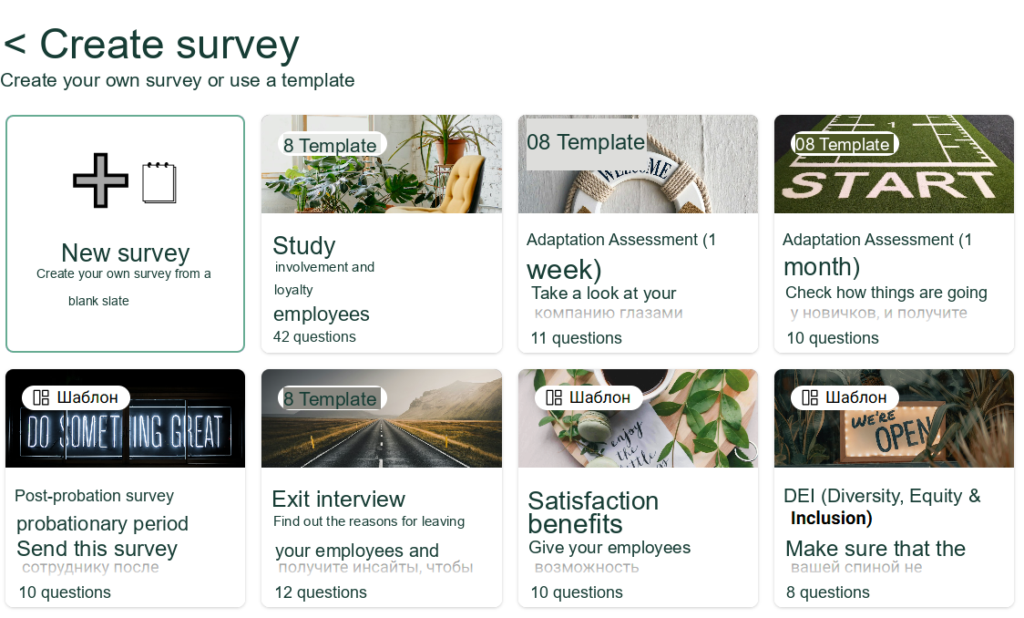
Survey templates in Appraise
The questionnaire is based on a methodology that accounts for all the factors listed above.
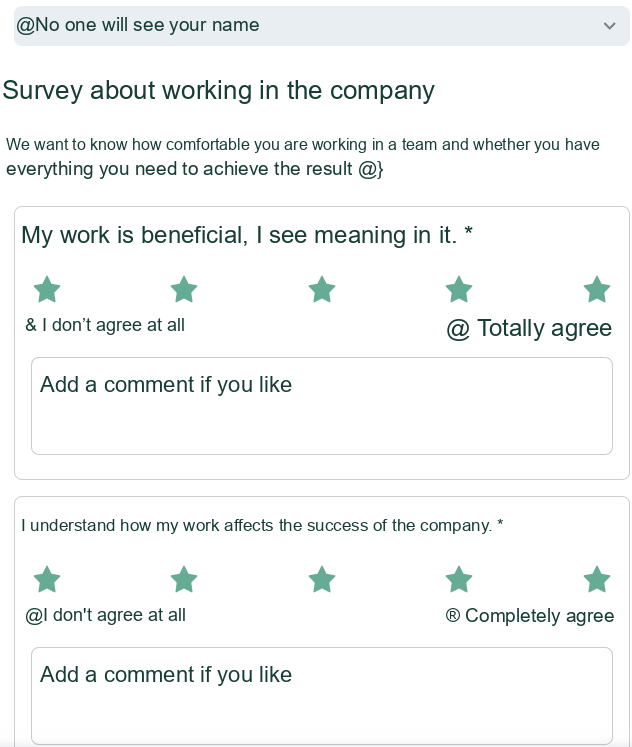
Appraise engagement survey questionnaire. Responses are anonymous
Employees can take surveys directly on the platform or in a familiar environment, such as Bitrix24, Telegram, and other corporate messaging apps. The survey is anonymous, and all data is stored in encrypted form.
The report is generated automatically. It shows engagement and loyalty levels, as well as the likelihood of retention over the next three years. It also presents satisfaction levels for compensation, benefits, relationships with managers, and working conditions.
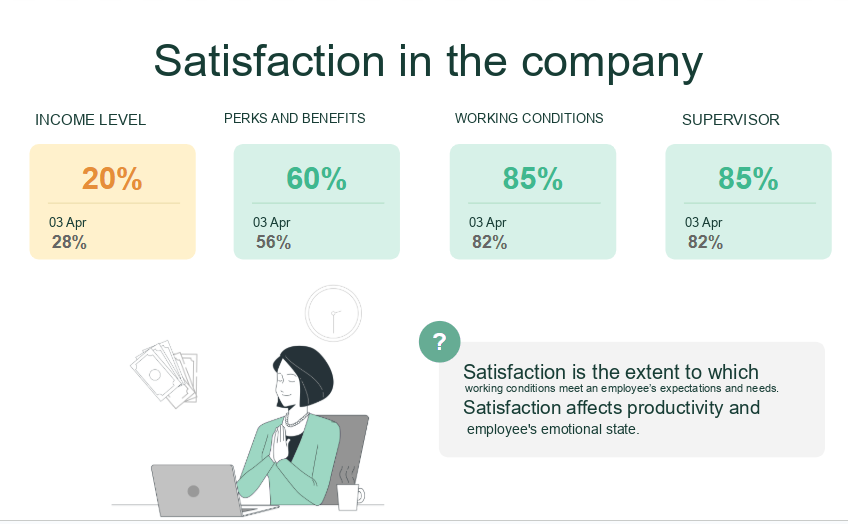
Company satisfaction is one of the metrics in an engagement survey
A detailed heat map by department shows where employees are highly engaged, less engaged, or completely disengaged.
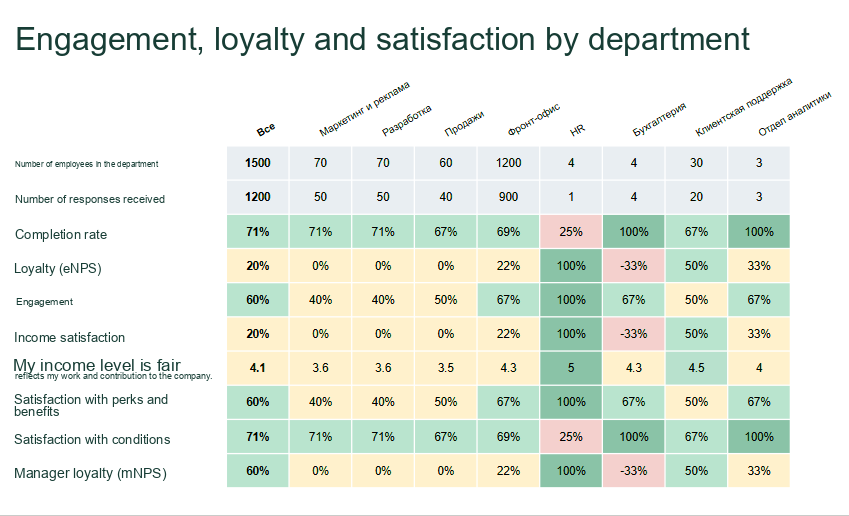
Employee engagement by department
AI-powered comment analysis identifies the most common themes, highlights what employees have noticed, and reveals the issues that concern them.
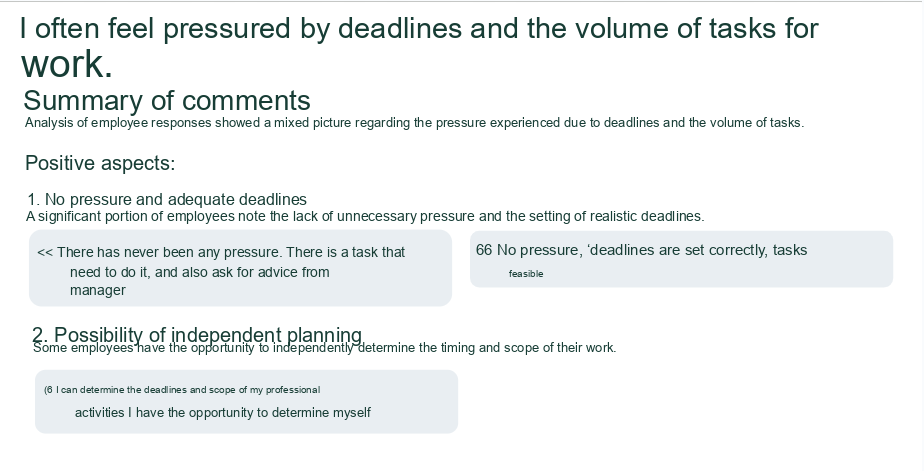
AI helps analyze employee comments
The report also includes clear conclusions and recommendations.
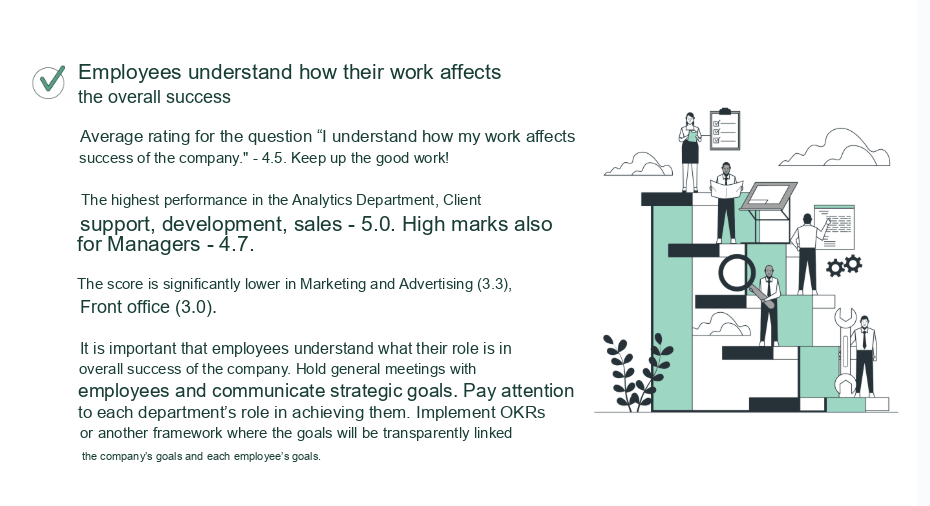
Recommendations in the Appraise report
The survey results show what is already working well in the company and where improvements are needed. This provides an excellent foundation for further planning. For specific issues, it is advisable to run pulse surveys every few months and analyze whether the metrics have improved.
It is also important to share the results with employees and emphasize that the company listens to them and pays attention to their interests and concerns.
How to motivate employees to take surveys
Gamification combined with a rewards system helps encourage employees to take surveys. In Appraise, for example, you can award virtual currency for each completed survey. Employees earn points and exchange them for real gifts in the corporate store.
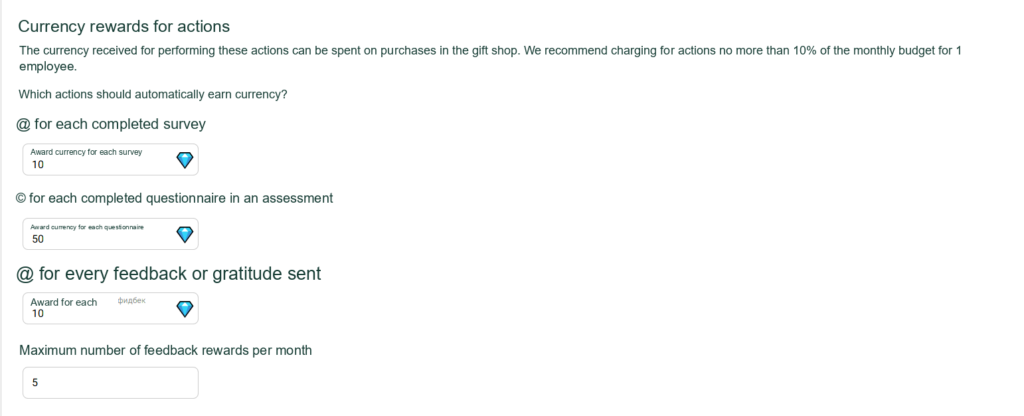
Awarding currency for survey completion in Appraise
The store can offer anything from gift certificates and subscriptions to sessions with a psychologist or an extra day off.
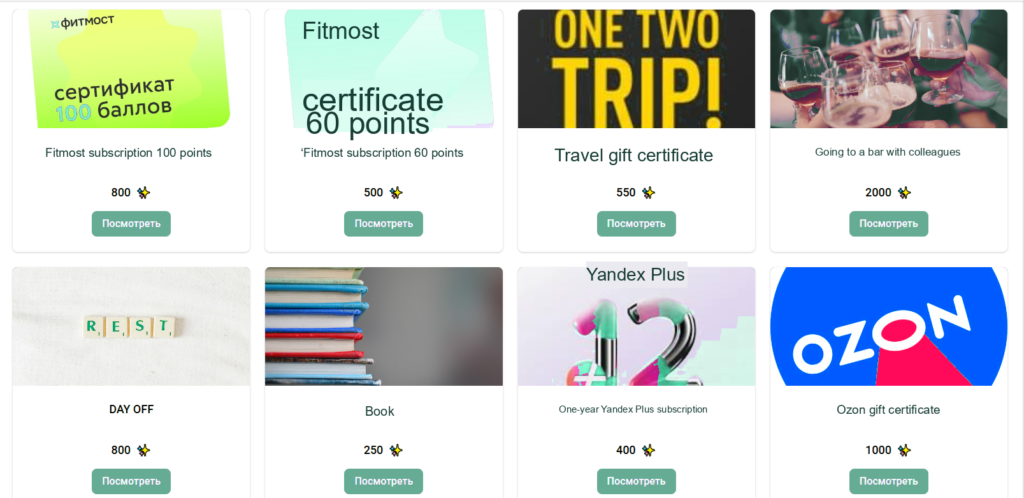
Example corporate store catalog
Engagement directly affects retention, productivity, and a company’s financial performance. Measuring it should form part of a systematic HR analytics cycle.
When employees see that their opinions are considered and acted upon, they develop trust and a desire to engage and contribute more to the company. This reduces turnover and enables the business to achieve more predictable results.
Conduct these surveys regularly, at least twice a year, and share the findings with the team afterward. This will not only improve work processes, but also create an environment where people genuinely want to work and feel comfortable doing so.
See how Appraise helps increase engagement and motivate valuable professionals