



This article explains how to create, launch, and close surveys correctly to achieve a high completion rate.
Imagine spending considerable time creating the perfect survey, carefully considering every word and adding humor to make it more engaging and less tiring. You click ‘send,’ but instead of the expected stream of responses, there is silence.
The ideal completion rate is 75% or higher
Low survey completion rates are a longstanding HR challenge. If you cannot gather enough high-quality responses, all the effort will have been wasted.
Why employees do not complete surveys
Reason 1. They do not understand the purpose of the survey
Employees often do not understand why they should take part in a survey at all: ‘HR has come up with something else and sent us a survey, but it is not clear why we need it.’
What to doRun a PR campaign for the survey. Explain why you are conducting it, the timeline, why employees’ opinions matter, and how the results will affect their work. Emphasize that you value feedback about their experience in the company, team, and
with their manager. Explain that the survey is intended to make their experience at the company as comfortable as possible.
Reason 2. Employees see no changes after the survey
Some companies conduct surveys but take no steps afterward to improve working conditions. Seven out of ten employees ask for office plants, yet none appear. Ten out of ten complain about a toxic manager, but are left to handle it themselves.
What to doReturn to the survey objectives every time. Why did you conduct it? What did you want to influence? There is no point in running a survey for its own sake. Listen to employees, share the findings, and take steps to improve working conditions. When people can see through your actions that their opinion is valued, they are more likely to provide feedback next time.
If you take no action based on the data, employees will stop taking surveys seriously and provide perfunctory answers next time. Show the team that their opinion genuinely matters to the company.
Reason 3. Surveys are conducted once a year or less
The main reason people find exchanging feedback stressful is not a lack of professionalism, but a lack of regularity. If employees provide feedback only during surveys, the situation will feel unfamiliar and stressful.
What to doBuild a feedback culture where employees and managers discuss issues openly, provide regular feedback, and establish future expectations. Make feedback a natural part of the workflow, and employees will no longer feel stressed when new surveys are announced.
Reason 4. Long questionnaires
A 50-question questionnaire is the natural companion to infrequent surveys. After question 15, people will simply start choosing answers at random.
What to doReduce the number of questions but conduct surveys more frequently. For example, run an engagement survey quarterly rather than every six months or once a year.
Reason 5. A dull, unengaging survey experience
A Likert scale may sound complicated, but you have certainly encountered one before. It is a numbered scale used to indicate how strongly you agree or disagree with a statement. It is particularly effective for measuring opinions.
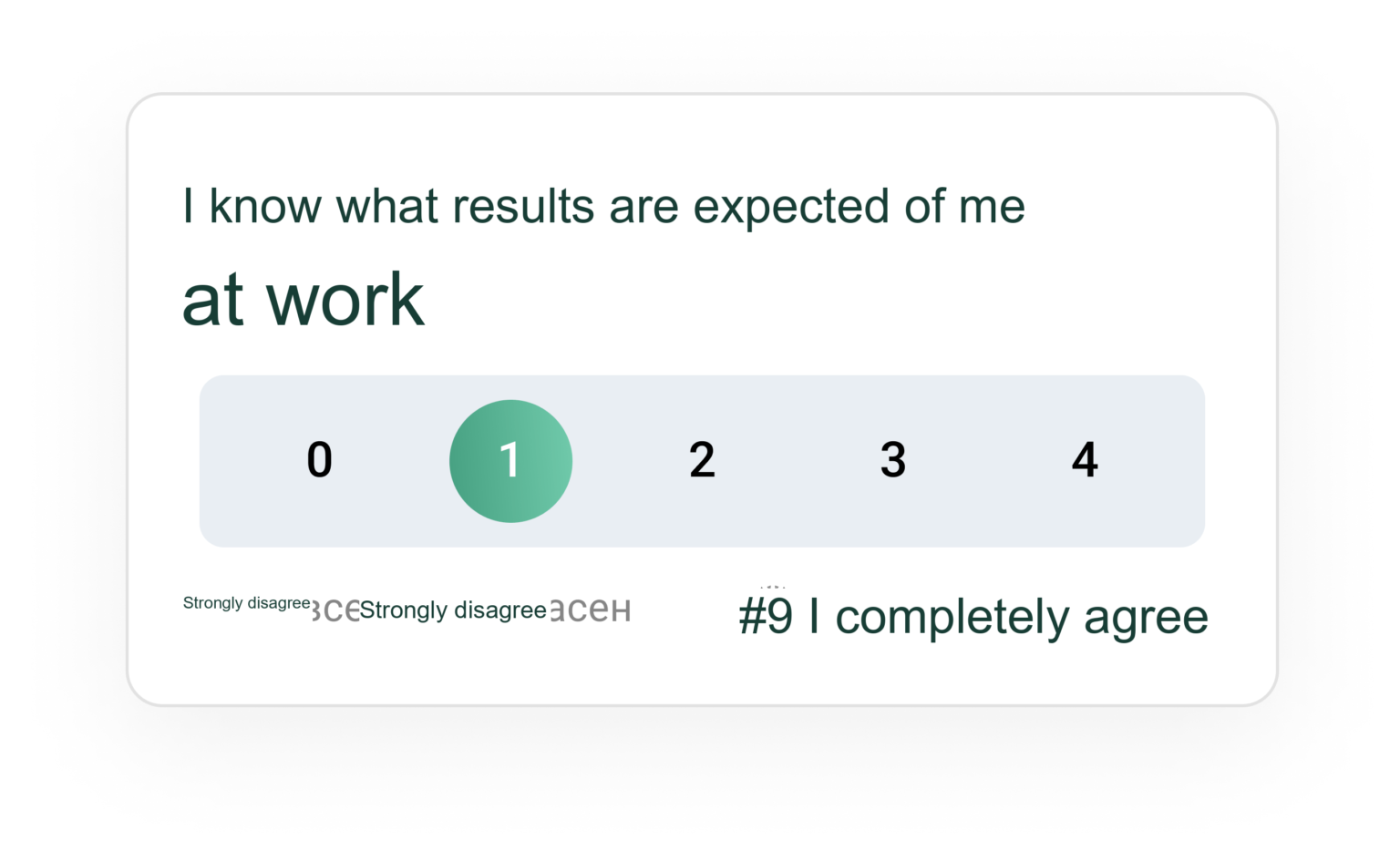
Example of a Likert scale
Guide
How can you encourage employees to complete surveys?
The importance of gamification
Virtual currency
The platform includes virtual currency, such as points or karma, which you can name however you wish. Employees can give it to one another in recognition of completed work and then exchange it in the rewards store. What is it for?
- It encourages employees to recognize one another, helps identify and retain talent, and motivates even greater achievements.
- It is an excellent way to manage rewards. Virtual currency supports a flexible benefits system, which is especially important for remote teams when some local benefits, such as private health insurance, are unavailable.
- It strengthens corporate culture, encourages mutual support, and engages employees in surveys.
How does virtual currency work? Each month, the company allocates currency for employees to give to colleagues. Any unspent allocation expires when the next one is issued. Currency received from colleagues never expires and can be saved and exchanged for rewards in the store.
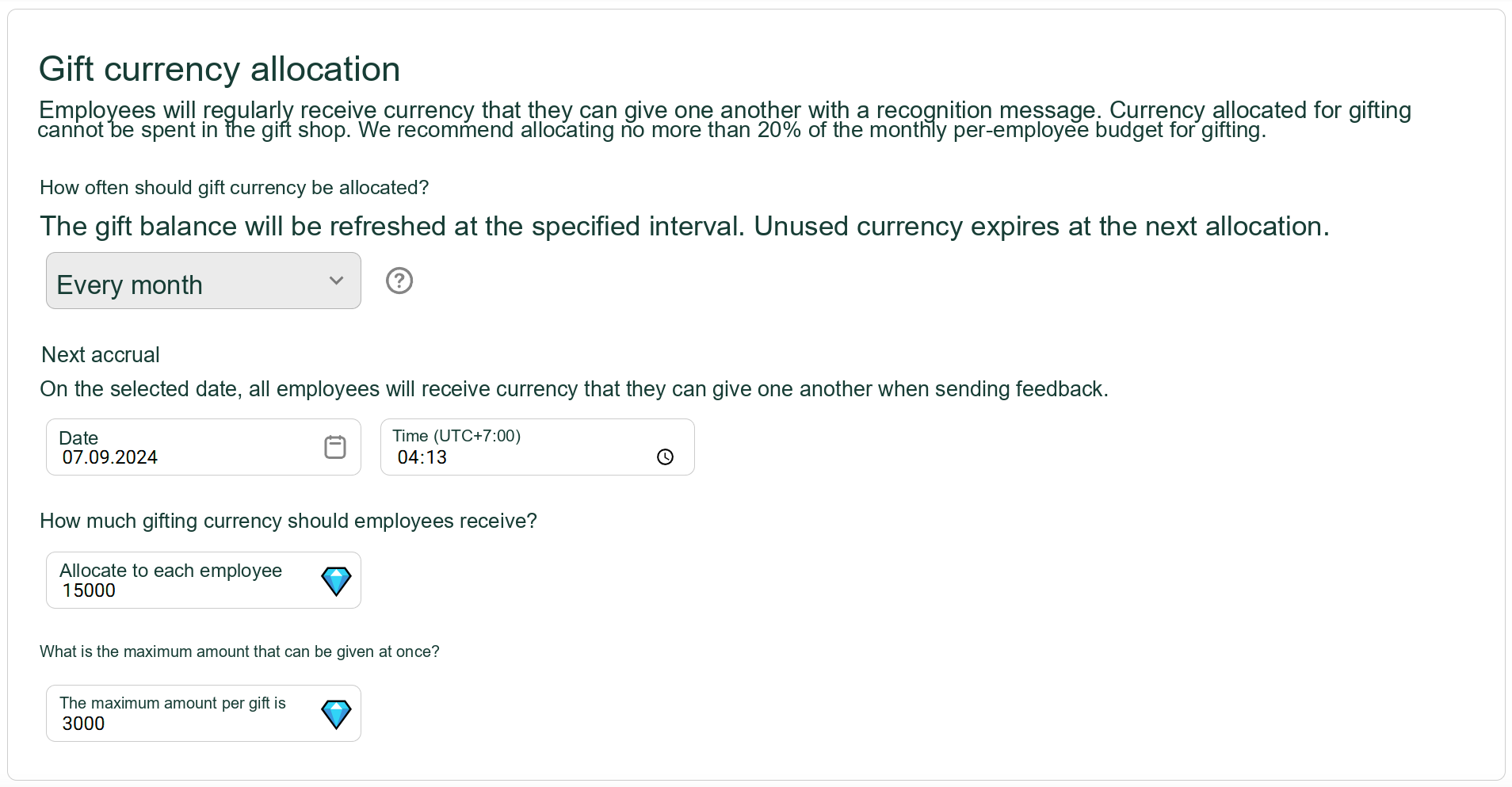
Allocating virtual currency to give to colleagues
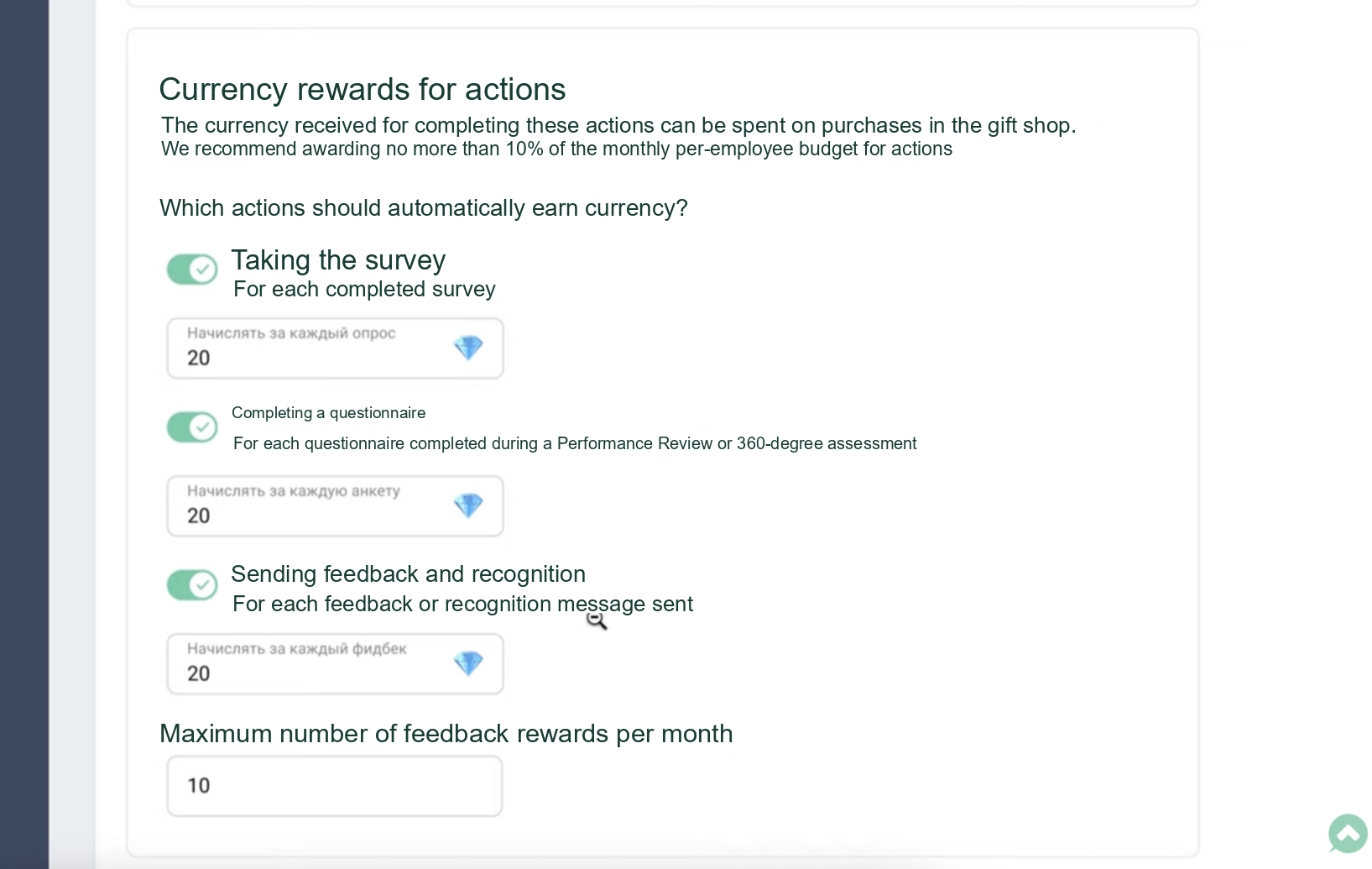
Awarding virtual currency for actions
Rewards store
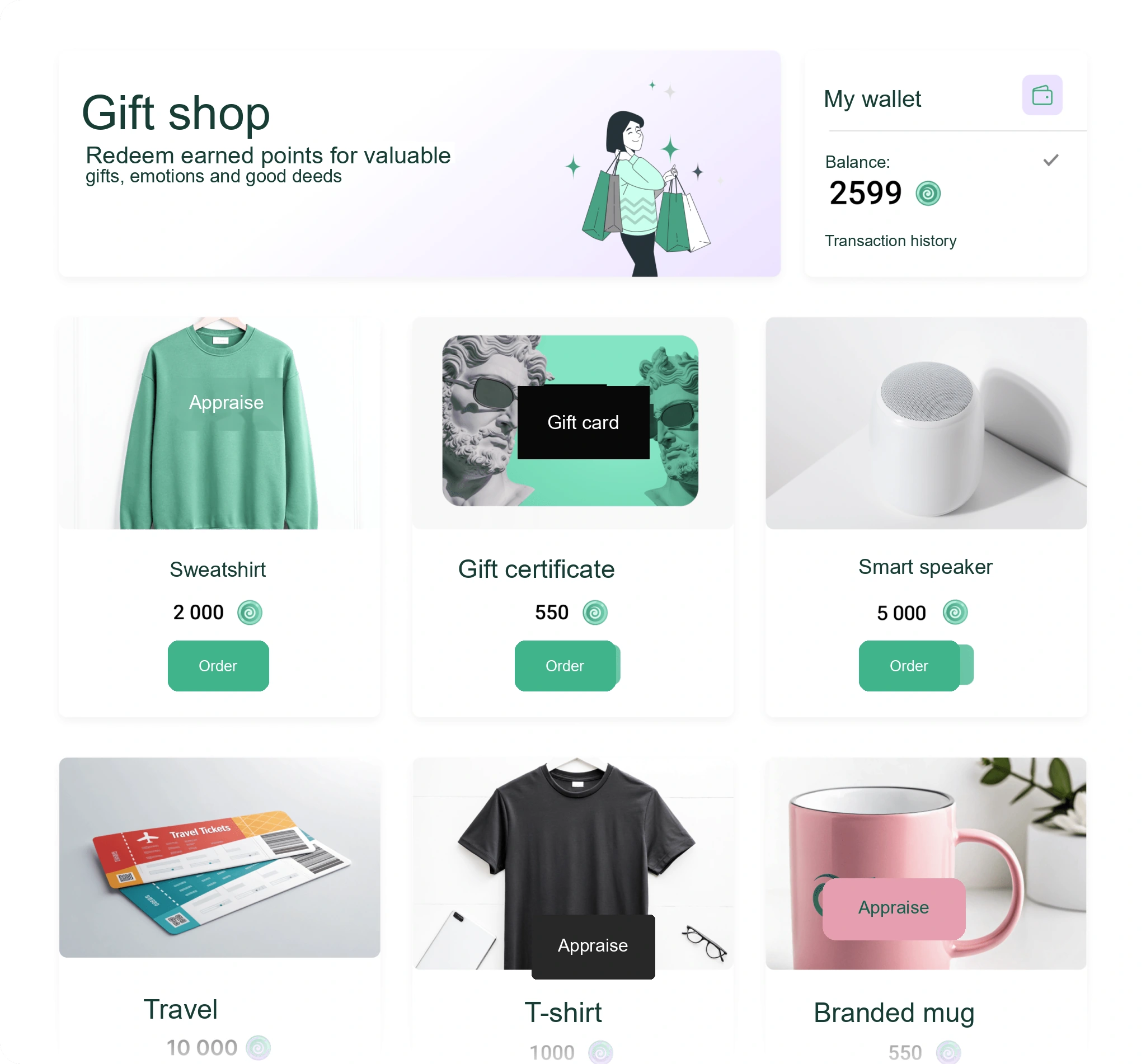
Rewards store in Appraise
Gamification can also increase employee engagement in surveys and assessments, since points are awarded for every completed action. You decide how many points each action earns.
Make surveys more comfortable for employees