



If only there were something you could do to keep your best employees from leaving… One of the secret tools for retaining them is the stay interview. This article explains what it is and how to use it for employee retention.
What is a stay interview?
A stay interview is a 1:1 meeting with a current employee to discuss what they like about the company and what they would change about the business, team, or role if they could. Stay interviews also help anticipate departures among current team members and plan recruitment.
One key difference from an exit interview is who conducts the meeting. Exit interviews are usually the responsibility of HR, while stay interviews are conducted by the employee’s direct manager.
This difference reflects the interviews’ distinct goals. During an exit interview, HR seeks to understand whether there are underlying problems it should know about that might cause other employees to leave. Stay interviews, by contrast, gather information about how to improve a particular employee’s experience. Because managers interact with their direct reports more often, it makes sense for them to play a more significant role in stay interviews than HR.
Stay interview
Exit interview
The interview is conducted with a high-performing employee
The interview is conducted with an employee who is leaving
The interview is conducted by the employee’s direct manager
The interview is conducted by HR
Goal: learn how to improve the employee’s experience at the company and retain them
Goal: identify problems within the company, team, and role that may cause other employees to leave
How stay interviews help retain employees
Here are several more benefits of stay interviews:
- Identifying problems. Stay interviews are an effective way to collect employee feedback and identify potential reasons for leaving. Triggers may include a lack of professional development, inefficient business processes, excessive workloads, and more.
- Finding solutions. Equipped with this information, you can take steps to address your best employees’ dissatisfaction and support their retention.
- Strengthening trust and loyalty. By conducting stay interviews, you show employees that their opinions matter and that you are prepared to take specific steps to make their experience at the company more comfortable.
- Retaining talent. If you know how to make key employees happier and take concrete action, you can be confident that they will stay with you for longer.
Although a stay interview focuses on retaining one employee, some of the steps you take may benefit others too. Examples include introducing training or hiring new team members to preserve key employees’ work-life balance.
A word of caution: if you do not take steps to resolve the problem after the meeting, you may undermine employee trust instead.
How to conduct a stay interview
1. Decide who will conduct the interview
2. Identify key employees and schedule the meeting
3. Ask questions
- What do you like most about the company?
- What do you like least about the company?
- If you could change one thing about your team, what would it be?
- If you could change one thing about the company, what would it be?
- Do you feel valued? If so, how is that demonstrated? If not, why do you think that is?
- Do you feel that the company is invested in your professional growth? If so, how is that demonstrated? If not, why do you think that is?
- Do you have a healthy work-life balance?
- What would you like to do that you are not doing now? Consider new tasks, projects, or roles.
- What three important goals would you like to achieve right now?
- What is preventing you from achieving these goals?
- How can I and the company as a whole help you achieve these goals?
4. Listen
5. Take action
This is the most demanding part of the interview because it requires finding solutions to retain the employee. Depending on their needs, the solution may be a flexible schedule, new tasks, or an additional day off. Whatever it is, create a plan with specific steps and implementation deadlines. Keep the employee informed about the progress of each issue as well. This shows that you care and genuinely want to do everything possible to support them.
6. Forecast employee turnover
The meetings are complete and the plans are documented; now it is time to create a rating. You can choose any ranking system, but for convenience, we recommend green, yellow, and red ratings. Green employees are those you believe will remain with the company for at least a year. Yellow employees can likely be retained for no more than a year. Red employees are extremely dissatisfied and may leave at any time. You can use this rating to forecast turnover and plan recruitment in advance.
You can also use the rating to evaluate the actions taken after stay interviews. How many employees rated yellow moved to green? How many moved from red to yellow? Repeating the analysis will show how effectively you have worked to retain employees.

Free guide
How to conduct a stay interview
An alternative to stay interviews
Despite all their benefits, stay interviews require considerable time and effort. Another way to anticipate departures among key employees and improve retention is an engagement and loyalty survey. Because the survey is anonymous, you cannot determine a specific person’s engagement, but you can understand the team’s overall sentiment.
The survey results serve as a litmus test, indicating either that something is wrong or that you are doing everything correctly. In the first case, the manager can confidently schedule stay interviews with direct reports because the evidence supporting their necessity is clear.
With Appraise, you can launch a survey quickly and identify areas for improvement.
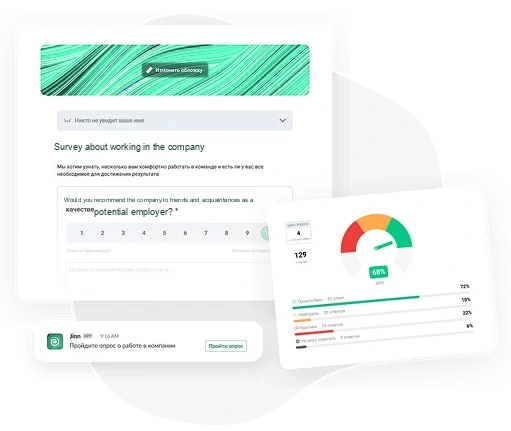
Survey example
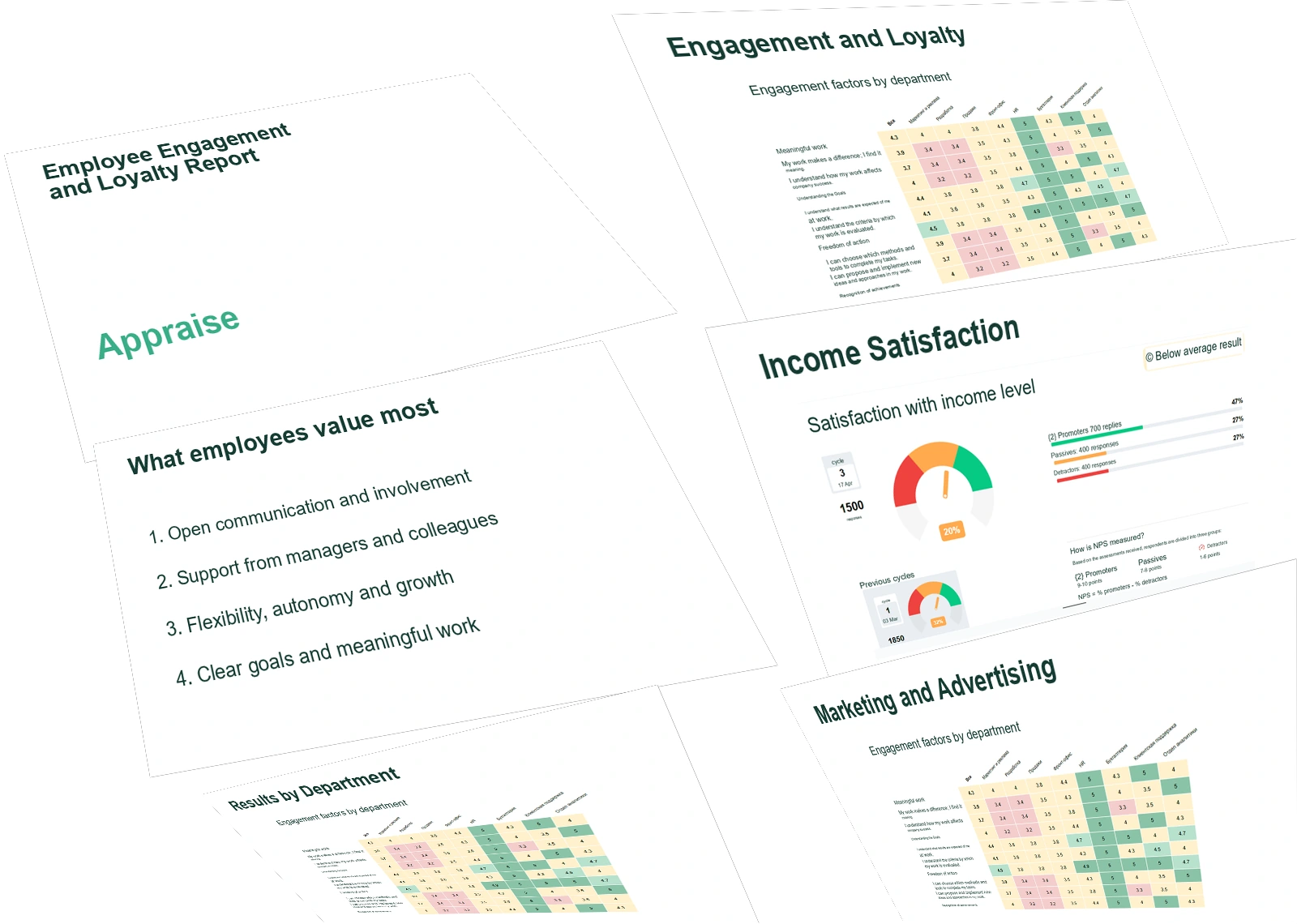
Report example
Learn more about Appraise