



Regular feedback builds trust, supports professional development, and has a significant impact on employee engagement. Let us explore how to work with feedback so that it benefits both employees and the company.
Contents
Types of feedback
Feedback refers to written and verbal comments that colleagues exchange with one another. This exchange can take place both among team members and between employees at different levels — for example, between a manager and a direct report.
Depending on the context and professional situation, the following types of feedback can be identified:
- Formal. Discussed as part of work-related interactions. Examples include performance reviews, monthly meetings with HR, or one-on-one conversations with management.
- Informal. This type of feedback can be gathered from messages in communication tools, pulse surveys, team meetings, or suggestion boxes. Informal feedback is particularly important for creating a culture of open communication within the company.
- Specific. This is targeted feedback concerning particular events or tasks. For example, a new product launch is an excellent opportunity to exchange comments and ideas for improving future launches.
- General. It overlaps with informal feedback but deserves separate mention. It most often consists of constructive comments that do not necessarily need to be tied to specific events or times. A quick exchange of brief, general comments is an important part of any feedback cycle.
Let us look at exactly how feedback affects employee engagement and loyalty.
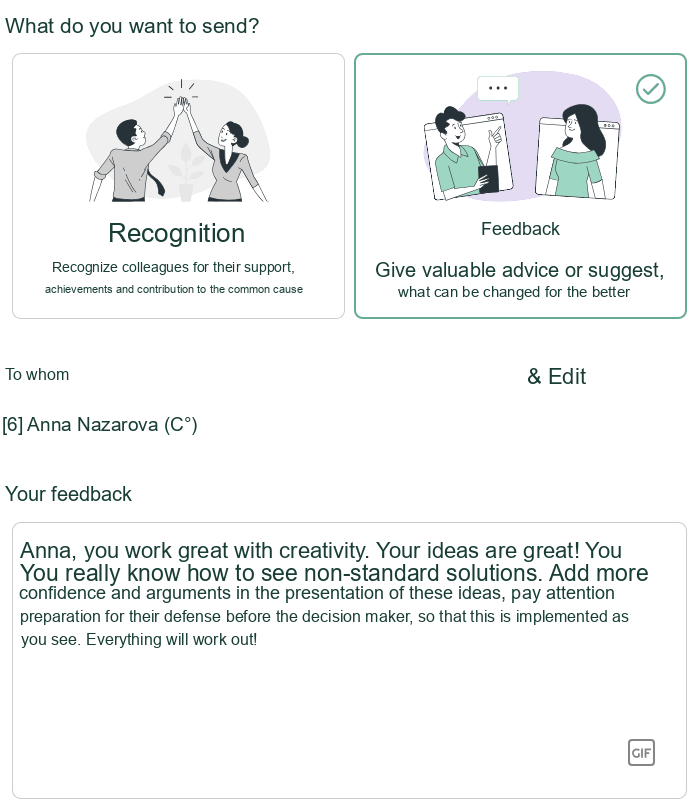
Constructive feedback through the Appraise platform
5 reasons to introduce feedback, or How regular feedback increases employee engagement
1. Informal recognition of achievements
The connection between recognition and engagement is clear: when people feel valued, they become more motivated and engaged in their work.
Regular feedback is a simple way to recognize employees’ achievements informally. There is no need to wait for formal promotion discussions or annual reviews. See how employee engagement grows when you regularly give positive feedback — the results may surprise you.
2. Supporting employee development
For many people today, money is not the primary motivator. Employees want to know that their work is meaningful and that the company values their career development. Otherwise, they lose engagement and begin to consider leaving.
Feedback shows employees that their success and development matter to the company. Even when offering constructive criticism, remind them that you are doing so because you believe in their potential and want them to reach greater heights. It is much easier to retain current employees than to spend resources finding and hiring new ones.
3. Creating a culture of openness
A strong, cohesive corporate culture is the foundation of a company’s long-term success. This is especially important for remote teams. The better employees interact with one another and enjoy working together, the greater their effectiveness and results.
When feedback becomes part of the company’s daily work, employees become accustomed to openness and transparency in communication. They stop feeling self-conscious or avoiding the expression of their thoughts and concerns. In a comfortable environment, people share ideas and direct the team’s efforts toward common goals. This culture of openness helps build highly engaged teams.
Read about how to build a feedback culture in our article.
4. Increasing motivation
Companies need to do everything possible to keep their employees motivated and inspired by their work every day. Exchanging feedback regularly is an obvious way to achieve this.
The desire to receive positive feedback is part of human nature: when our efforts are properly recognized, we feel motivated to repeat that success in the future.
Constructive criticism can also increase motivation. If an employee experiences a setback but sees opportunities for growth, it encourages them to work harder and improve their performance.
5. Encouraging initiative and proactivity
Another important way to increase engagement is to give employees an opportunity to be heard. Asking for their opinions or ideas shows that they are valued. They feel that they are contributing to change rather than simply following management’s instructions.
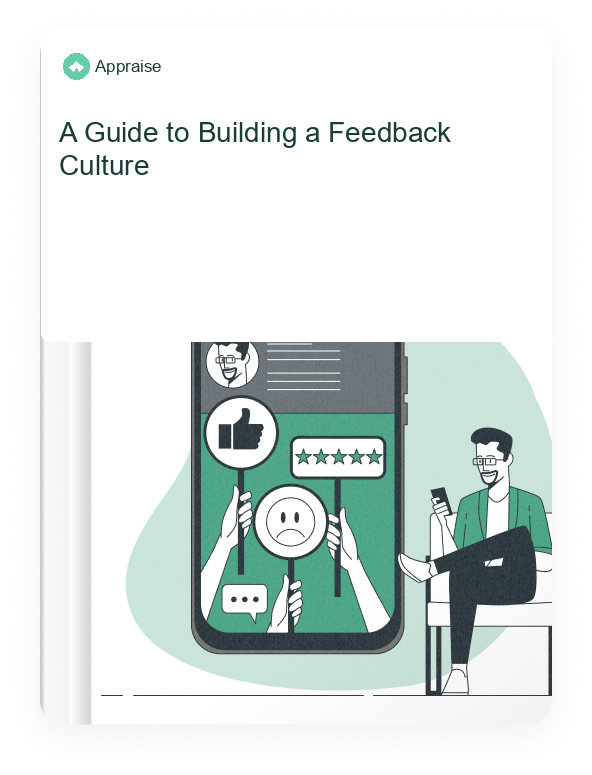
Free guide
How to implement a feedback culture: a step-by-step plan and templates
When and how to collect feedback
It is important to strike the right balance with feedback. If it is collected and given too rarely, there is a risk of missing problems and opportunities for improvement. If it happens too often, employees may become overwhelmed, negativity may increase, and response quality may decline. It therefore makes sense to combine:
- daily informal feedback: brief comments, recognition of achievements at work, and support;
- regular one-on-one meetings: discussions of current tasks, progress, and development every one to two weeks;
- formal performance and development processes: Performance Reviews, goal setting, and individual development plans.
Depending on the situation, feedback may be positive, negative, or neutral, but it should always be constructive. Appraise helps manage feedback systematically. The platform allows any employee to give and request feedback in just a few clicks.
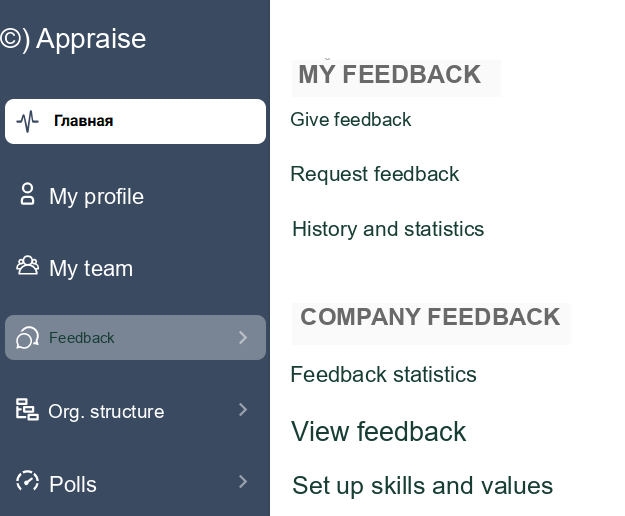
Feedback in Appraise
Automated data collection and detailed analytics provide a clear picture of team engagement and satisfaction levels. Using accurate data, HR professionals and managers can identify issues promptly, adjust feedback practices, and improve employee engagement and loyalty.
Automate feedback collection
Create surveys in just a few clicks, get objective data, and increase employee engagement without stress